
 EN
Exporting guest amenities to international markets requires strict adherence to material safety regulations that vary significantly by region and product category. Whether you are a manufacturer, distributor, or guest amenities suppliers serving hotels worldwide, understanding these compliance requirements is essential to avoid costly rejections, product recalls, and legal liability. The landscape of material safety rules for hotel room accessories continues to evolve as regulatory bodies strengthen consumer protection standards.
The complexity of material safety for hotel electrical amenities and other guest amenities stems from overlapping jurisdictional requirements, product-specific testing mandates, and material composition standards. Export-focused guest amenities suppliers must navigate certification requirements across North America, Europe, Asia, and other markets where hospitality businesses source amenities. Understanding these rules early in product development prevents expensive redesigns and delays at the export stage.
Key Material Safety Standards for Hotel Amenities
Understanding International Compliance Frameworks
Hotel room accessories exported internationally must comply with multiple safety frameworks depending on destination markets. The European Union enforces strict material restrictions through REACH (Registration, Evaluation, Authorization and Restriction of Chemicals) and RoHS (Restriction of Hazardous Substances) directives, which limit certain heavy metals and flame retardants. North American markets follow FDA regulations for items contacting skin or food, along with CPSC (Consumer Product Safety Commission) standards for consumer products.
For OEM guest amenities, compliance typically begins with material composition testing and toxicity assessments. Guest amenities including bathroom amenities, textiles, plastics, and metal components each carry specific safety thresholds. Lead content in ceramics, phthalate levels in PVC products, and formaldehyde emissions from textiles are common test parameters. Guest amenities suppliers must maintain documentation proving that raw materials and finished products meet threshold limits before shipment to export markets.
Electrical Safety Requirements for Hotel Amenities
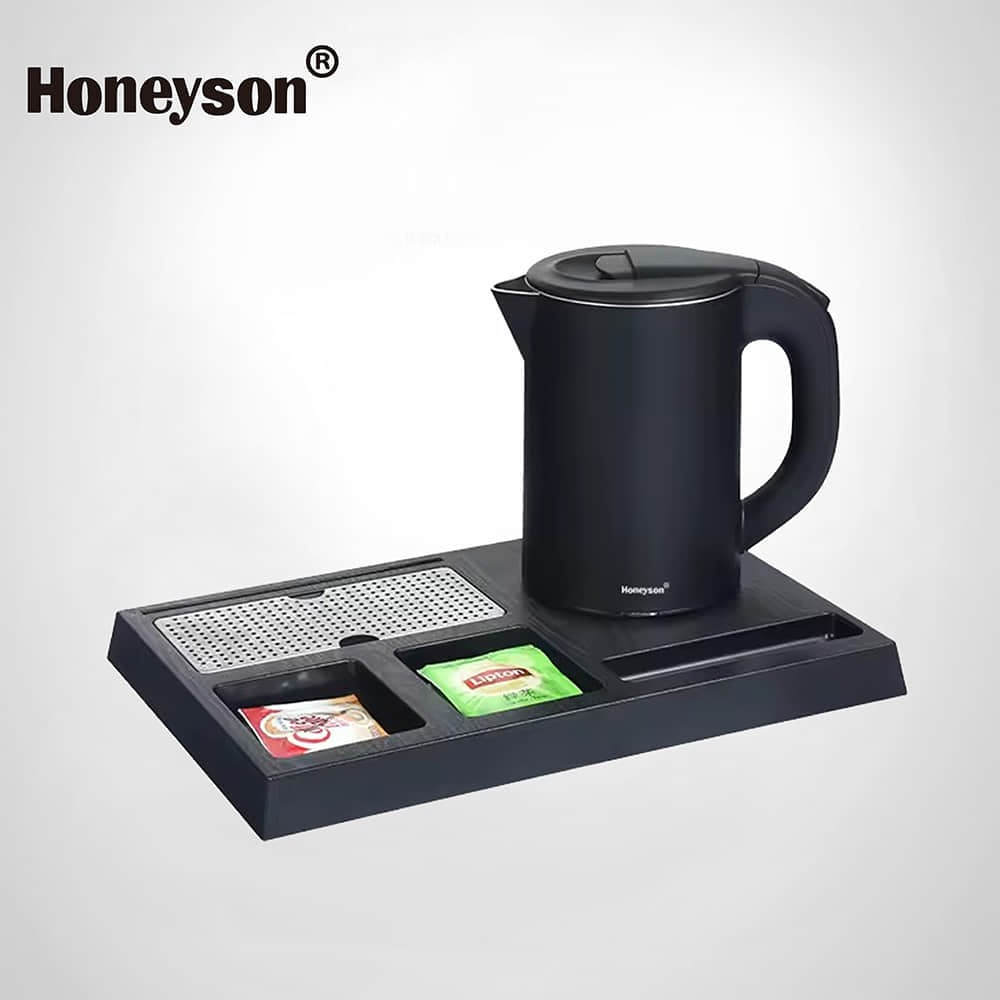
Hotel electrical amenities such as kettles, coffee makers, hair dryers, and charging devices face rigorous certification demands across export destinations. These products typically require CE marking in Europe (meeting EN 60950 or EN 62368 standards for electrical safety), UL or ETL certification in North America, and country-specific approvals in Asia-Pacific regions. OEM guest amenities suppliers must ensure voltage compatibility, grounding standards, and thermal protection mechanisms align with target market requirements.
Electrical safety testing includes shock hazard assessment, fire risk evaluation, and mechanical stability verification. For hotel room accessories with electronic components, battery safety, charging circuit protection, and thermal shut-off functionality are non-negotiable. Testing laboratories accredited by national authorities must conduct these evaluations, and guest amenities suppliers must retain certification records for regulatory audits and customer verification.
Material Composition and Chemical Safety Requirements
Restricted Substances and Toxicity Limits
Material safety rules for guest amenities prohibit or limit numerous chemical substances based on health and environmental risks. Phthalates in plastic products, lead in glazed ceramics, cadmium in decorative items, and formaldehyde in textiles are subject to strict thresholds. The EU REACH regulation maintains a list of substances of very high concern (SVHC), and compliance requires either use of alternatives or explicit authorization. OEM guest amenities suppliers must implement supply chain testing protocols to verify that component suppliers meet these restrictions.
Material safety documentation should include technical data sheets (TDS), safety data sheets (SDS), and test certificates for all materials used. Guest amenities suppliers often must demonstrate traceability from raw material suppliers through finished product. For hotel electrical amenities, insulation materials must comply with fire-resistance standards, and circuit boards must be free from banned flame retardants. Third-party laboratory confirmation of material composition strengthens export market access and customer confidence.
Labeling and Declaration Requirements
Regulatory frameworks mandate clear labeling of guest amenities to inform end users and housekeeping staff about safe use and material content. Hotel room accessories require language labels in destination market languages, warning symbols for electrical products, and care instructions for textiles. OEM guest amenities suppliers must include material composition declarations on packaging or product inserts, particularly for items contacting skin. Some markets require country-of-origin labeling and allergen disclosures, especially for scented or botanical amenities.
For hotel electrical amenities, labeling must include voltage range, power consumption, and thermal safety information. Guest amenities suppliers should also provide batch or lot numbers for traceability during product recalls. Incorrect or missing labeling can trigger regulatory rejections at borders, leading to shipment delays and customer dissatisfaction. Investment in multilingual labeling templates and artwork approval processes prevents compliance failures during export logistics.
Testing, Certification, and Export Documentation
Third-Party Testing and Accreditation
Material safety compliance for guest amenities requires testing by internationally recognized laboratories holding accreditation from national conformity assessment bodies. For European export, testing must follow ISO/IEC 17025 standards and cover CE marking requirements. OEM guest amenities suppliers often conduct initial material testing during product development, then arrange batch verification testing before each export shipment. For hotel electrical amenities, full electrical safety testing must precede market launch.
The cost and timeline of testing varies by product category and destination market. Simple plastic hotel room accessories may require only material composition testing (3–5 weeks), while electrical amenities demand comprehensive safety testing (6–8 weeks). Guest amenities suppliers should budget for recurring testing across major export regions and plan product launches accordingly. Maintaining relationships with accredited testing laboratories accelerates certification and reduces lead time variability.
Export Documentation and Customs Compliance
Guest amenities destined for export markets require comprehensive documentation packages accompanying shipments. Certificates of conformity (CoC), test reports from accredited laboratories, material safety data sheets, and invoices must be prepared according to destination country requirements. For OEM guest amenities, commercial invoices should specify material composition, manufacturing date, batch numbers, and applicable certification marks (CE, UL, etc.). Customs brokers and freight forwarders verify this documentation before border clearance.
Hotel electrical amenities require additional declarations such as energy efficiency ratings, electrical safety certifications, and voltage compatibility statements. Guest amenities suppliers must ensure all documentation is consistent with product labels, test certificates, and customer purchase orders. Missing or inconsistent documentation triggers customs holds, product inspections, and potential penalties. Many suppliers maintain document management systems to standardize export packages and reduce administrative errors.
FAQ
What material safety standards apply to guest amenities in European export markets?
European import of guest amenities requires compliance with REACH (chemical safety), RoHS (hazardous substance restrictions), and product-specific directives. Hotel room accessories must carry CE marking and include test certificates from accredited laboratories. OEM guest amenities suppliers should verify that materials meet lead, cadmium, and phthalate limits, and electrical products must comply with EN electrical safety standards. Documentation should include conformity declarations and technical files available for regulatory inspection.
How do hotel electrical amenities differ from standard consumer electrical products in safety requirements?
Hotel electrical amenities must meet hospitality-specific safety standards because they operate in shared guest environments where misuse risks are high. These products require thermal shut-off mechanisms, ground fault protection, and reinforced insulation beyond standard consumer appliance requirements. Guest amenities suppliers must conduct testing that simulates extended use cycles and environmental stresses typical in hotel settings. Additionally, electrical amenities often require country-specific certifications (UL for North America, CE for Europe, PSE for Japan) before export can proceed.
What documentation should guest amenities suppliers maintain for export compliance?
Guest amenities suppliers should maintain technical data sheets, material safety data sheets, test certificates from accredited laboratories, certificates of conformity, manufacturing records with batch numbers, and product labels in destination market languages. For OEM guest amenities, supply chain documentation from component suppliers proves material traceability and compliance. Hotel room accessories exported to multiple regions require region-specific documentation packages addressing local regulatory requirements. Digital document management systems help suppliers respond quickly to customer inquiries and regulatory audits during export operations.
