
 EN
The design of blender blades is far more than a cosmetic detail. Every aspect of a blender blade—from its angle and thickness to the number of leaves and material composition—directly influences how your licuadora performs, how efficiently it processes ingredients, and how long it will operate reliably. For manufacturers, OEM blender engineers, and commercial kitchen operators, understanding these relationships is critical to selecting or designing equipment that delivers consistent results without premature wear or motor failure.
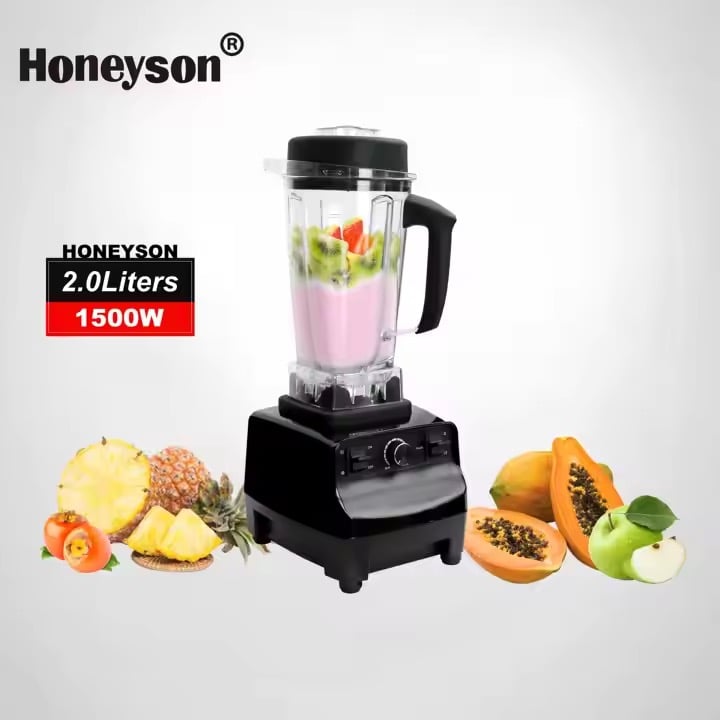
A personal blender or commercial blender's blade design fundamentally determines how well it can process soft fruits, frozen ingredients, nuts, and fibrous materials. When blade geometry is optimized, texture quality improves dramatically, motor efficiency increases, and the overall product life extends significantly. This article explores the engineering principles behind effective blade design and how these decisions shape real-world blender performance.
Blade Geometry and Texture Quality
Angle and Leaf Configuration
The angle at which blender blades are positioned relative to the vertical axis dramatically affects how ingredients are drawn downward and processed. A well-designed personal blender or commercial blender uses angled blades that create an optimal vortex pattern, ensuring all particles move toward the cutting zone uniformly. Most OEM blender designs employ six-leaf configurations at angles between 45 and 75 degrees, which balances shear force with directional flow. When blades are too vertical, ingredients tend to slip past without sufficient processing; when too angled, they create excessive turbulence without proper cutting action.
Blade Edge Sharpness and Material
The sharpness of the cutting edge directly determines whether your licuadora produces silky smooth purées or chunky inconsistencies. Stainless steel blades with a hardness rating between 58–62 HRC maintain their edge longer under continuous use. A sharp blade cuts through cell walls cleanly, creating smaller particle sizes and achieving uniform texture faster. Blunt blades, by contrast, crush and bruise ingredients rather than slice them, resulting in oxidation, heat generation, and poor texture consistency. For both personal blender and OEM blender applications, edge sharpness must be verified during manufacturing and periodically inspected for degradation in commercial settings.
Motor Load and Energy Efficiency
Impact of Blade Mass and Resistance
Blade design directly influences the rotational resistance your blender motor must overcome. A heavier blade assembly with poor aerodynamics creates higher drag forces, forcing the motor to work harder and consume more electrical energy. Conversely, a lighter, streamlined blade design reduces parasitic load, allowing the motor to reach optimal speed faster and sustain it with lower power draw. For a personal blender running at 20,000–30,000 RPM, even small reductions in blade mass translate to meaningful efficiency gains. OEM blender manufacturers carefully balance blade thickness—enough to withstand stress but not so much that it wastes energy.
Vortex Formation and Flow Resistance
The spacing between individual blades and their surface finish affects how smoothly the licuadora's internal fluid flows around the blade assembly. Optimal blade spacing creates a stable vortex that pulls ingredients downward with minimal turbulent eddies. Poor spacing generates chaotic flow patterns, requiring the motor to work harder to maintain speed against this resistance. Commercial blender engineers optimize the gap between leaf pairs to approximately 1.5–2.5 mm, which provides adequate clearance while maintaining directional fluid momentum. This precision design reduces motor strain, lowers operating temperature, and extends equipment lifespan significantly.
Product Durability and Long-Term Reliability
Material Fatigue and Blade Failure Modes
Stainless steel blades experience cyclic stress during each blend cycle. Stress concentrations typically occur at the base where the blade joins the hub. A well-engineered personal blender or OEM blender uses gradual stress transitions—smooth fillets and tapered connections rather than sharp corners. These design features reduce the peak stress concentration factor, extending the fatigue life of the blade assembly. Inferior designs create stress risers where cracks initiate under repeated loading, leading to blade breakage after relatively few operating hours. Material selection matters too; premium 420J or 440C stainless steel resists corrosion and maintains hardness better than lower-grade alloys.
Bearing and Seal Longevity
Blade design indirectly influences bearing life through vibration and thermal load. An unbalanced blade assembly creates vibration that accelerates bearing wear and seal degradation. A balanced licuadora blade set—where mass distribution around the hub is uniform—rotates smoothly with minimal vibration. Thermal load also matters; blades that generate excess friction heat during processing contribute to higher internal temperatures, which degrades bearing lubricant and seals faster. By minimizing friction through optimized blade geometry, OEM blender engineers reduce both vibration and heat generation, directly extending bearing and seal service life to thousands of operating hours.
FAQ
How does blade angle affect the texture produced by a personal blender?
Blade angle determines the direction and intensity of the vortex flow pattern inside the container. Blades angled at 45–60 degrees create strong downward pull, drawing all ingredients into the cutting zone uniformly. This consistent engagement produces smooth, homogeneous texture with minimal chunking. Shallow angles allow ingredients to circulate without sufficient cutting action, resulting in inconsistent texture. A properly angled personal blender or OEM blender blade ensures that hard ingredients like nuts and frozen fruit are processed evenly throughout the blend cycle.
Why do some blender motors overheat during extended use?
Motor overheating typically results from high drag resistance created by poor blade design or dull blades. When a licuadora's blade geometry is suboptimal, the motor works harder to maintain speed, generating excessive heat. Blunt blades increase friction both at the cutting surface and through turbulent flow resistance inside the container. An OEM blender with properly shaped, sharp stainless steel blades reduces this friction significantly, allowing the motor to operate at lower temperature even during continuous use. Regular blade inspection and cleaning also prevent buildup that can restrict airflow and increase operating temperature.
What blade design features should I look for in a durable commercial blender?
Look for a personal blender or commercial OEM blender with six or more stainless steel leaves set at 45–75 degree angles, smooth radius transitions at the blade-hub junction, balanced mass distribution, and blade edges hardened to at least 58–62 HRC. The blade assembly should be rated for continuous operation at the motor's specified RPM without deflection or vibration. Premium materials like 440C stainless steel resist corrosion and edge dulling better than lower grades. A well-designed licuadora will include a protective hub design that limits mineral exposure and allows easy cleaning without compromising structural integrity or performance characteristics.