
 EN

Finding the right ironing board for a small room presents a genuine challenge for homeowners and hospitality professionals alike. Limited floor space often forces compromises between functionality, durability, and convenience. Whether you live in a compact apartment, operate a boutique hotel, or manage a tight laundry facility, understanding the tradeoffs between size, weight, and storage options becomes essential for making an informed purchase decision.
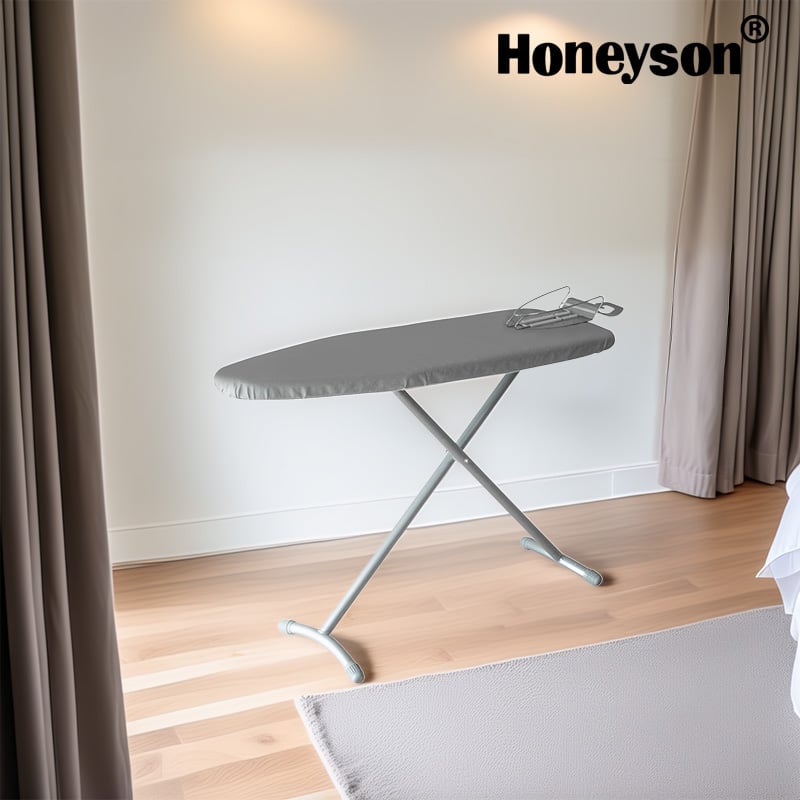
Space constraints demand practical solutions that do not sacrifice quality or ease of use. Modern foldable ironing board designs have evolved significantly, with manufacturers offering specialized options for environments where square footage is at a premium. From wall-mounted configurations to compact surfaces, the variety of solutions available today means you can maintain professional ironing standards without consuming precious room volume.
Understanding Compact Ironing Board Dimensions
Standard Size Versus Compact Models
A traditional ironing board typically measures 48 to 54 inches in length and 15 to 17 inches in width when fully extended. Compact models, by contrast, often reduce these dimensions to roughly 40 to 45 inches long and 12 to 14 inches wide. This reduction in surface area represents an immediate space-saving advantage, though users must accept a slightly smaller working surface. For hotel ironing board applications or residential units with minimal floor space, these smaller proportions make storage feasible in closets, under beds, or behind doors.
Height and Leg Span Considerations
The stability of any ironing board depends heavily on its leg span and height adjustment range. Compact models typically maintain adjustable heights between 28 and 36 inches, which accommodates various user heights and ironing preferences. However, narrower leg spans on foldable ironing board designs can reduce the overall footprint when in use. This means the board occupies less floor area but may feel slightly less stable than full-size alternatives. Users must weigh the convenience of reduced floor space against the minor reduction in balance and support during pressing tasks.
Weight Distribution and Portability Factors
Material Selection and Durability Impact
The weight of an ironing board directly influences both its stability and its portability. Full-size boards typically weigh 8 to 12 pounds, while compact foldable ironing board variants generally range from 5 to 8 pounds. Lightweight models, often constructed from aluminum frames and durable synthetic covers, offer easy handling but may exhibit some flex during vigorous pressing. OEM ironing board manufacturers frequently optimize materials to balance weight reduction with sufficient rigidity, ensuring professional-grade performance despite the smaller frame.
Stability Versus Mobility Trade-offs
A heavier ironing board sits firmly and resists movement during use, making it ideal for intensive ironing sessions. Conversely, lighter models sacrifice some inherent stability in exchange for portability, though quality design mitigates this concern considerably. For hotel ironing board applications where staff move between guest rooms frequently, lightweight construction becomes a significant advantage. Small-room environments benefit from boards that can be quickly repositioned or stored without excessive effort, making the weight consideration particularly relevant for practical daily use.
Storage Solutions and Space Optimization
Vertical and Compact Storage Methods
Effective storage transforms how compact spaces function. Wall-mounted ironing board designs fold up to occupy minimal horizontal space, often requiring only 4 to 6 inches of wall depth when stored. Foldable ironing board models with telescoping legs collapse to approximately 45 to 50 inches long and just 5 to 7 inches thick, making them suitable for closet storage or behind-door mounting. OEM ironing board solutions increasingly feature innovative storage mechanisms that allow boards to hang vertically or remain accessible without dominating the room.
Accessibility and Regular Use Balance
Storing an ironing board compactly means little if retrieving it becomes an inconvenience. Small rooms require placement that keeps the board accessible yet hidden. Undersized spaces benefit from wall-mounted hotel ironing board systems or compact foldable ironing board models stored in dedicated closet shelves. The key consideration involves balancing storage efficiency with practical access for regular use. Users who iron frequently need solutions that allow quick deployment, while occasional use tolerates less convenient storage positions.
Practical Selection for Different Scenarios
Residential Small-Space Considerations
Apartment dwellers and homeowners with limited square footage must prioritize space-saving features without compromising ironing quality. A compact foldable ironing board that collapses to manageable dimensions and fits behind a door or in a hallway closet addresses the core constraint of residential small rooms. The modest 12 to 14-inch width and 40 to 45-inch length remain sufficient for most garment types while fitting storage requirements. Weight between 6 and 8 pounds ensures portability between laundry areas and closets without physical strain.
Commercial and Hospitality Applications
Hotels, hostels, and guest accommodations face specific demands when selecting an ironing board for compact guest rooms or laundry facilities. A hotel ironing board must combine durability, ease of setup, and minimal footprint to satisfy guest expectations and staff efficiency simultaneously. OEM ironing board manufacturers offer specialized models with reinforced surfaces, quick-fold mechanisms, and compact dimensions that address these commercial requirements. These purpose-built solutions prioritize reliability and quick transitions between rooms, making them ideal for high-traffic hospitality environments.
FAQ
What dimensions define a compact ironing board for small rooms?
Compact ironing boards typically measure 40 to 45 inches in length and 12 to 14 inches in width, making them 8 to 9 inches shorter and 2 to 3 inches narrower than standard models. This size reduction allows storage in closets, under beds, or behind doors while still providing adequate working surface for most garments. The reduced footprint represents the primary advantage of choosing a compact foldable ironing board design for space-constrained environments.
How much weight difference exists between compact and full-size boards?
Full-size ironing boards typically weigh 8 to 12 pounds, while compact models generally weigh 5 to 8 pounds. This 3 to 4-pound difference may seem minor but meaningfully affects portability, especially for users who frequently move or store their board. A lighter foldable ironing board reduces physical strain during deployment and storage, making it particularly suitable for elderly users or busy hospitality staff managing multiple rooms daily.
Can compact ironing boards provide the same stability as standard models?
Quality compact ironing board designs, including hotel ironing board and OEM ironing board variants, maintain excellent stability through reinforced leg construction and optimized weight distribution despite their smaller footprint. While some ultra-lightweight models may exhibit minor flex compared to heavier alternatives, modern engineering ensures that properly designed compact boards remain stable for normal use. The difference in stability is negligible for typical ironing tasks, and premium foldable ironing board manufacturers specifically engineer their products to deliver professional-grade performance without compromising on portability or space efficiency.
