
 EN
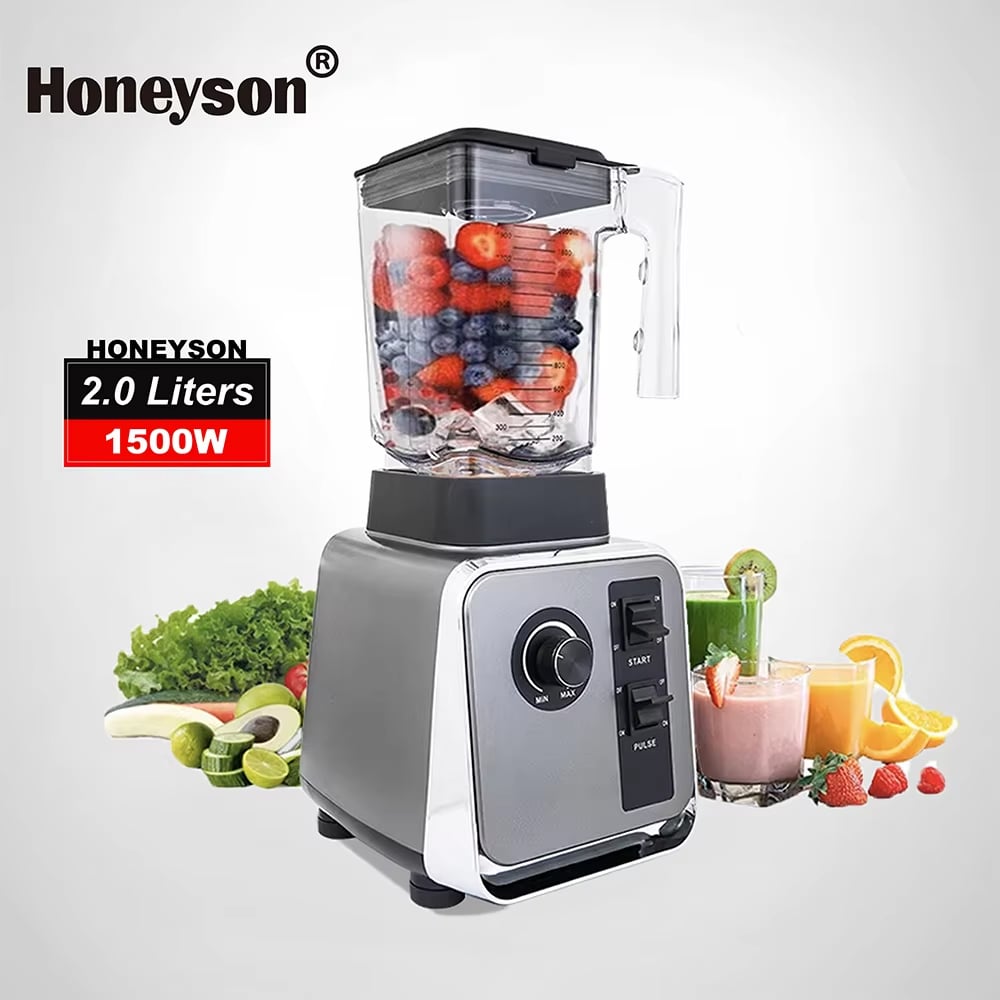
Understanding safety certifications for a licuadora across different export markets is essential for manufacturers, distributors, and importers who want to maintain compliance and consumer trust globally. Each region maintains its own regulatory standards and testing requirements, and what passes certification in one market may not automatically qualify for another. This complexity demands careful attention to the specific rules governing blender safety in your target markets, and proper OEM blender certification is critical for smooth global sales.

A blender, whether designed as a personal blender for home use or an OEM blender for commercial integration, must meet electrical safety, mechanical safety, and performance standards before entering regulated markets. The certification process typically involves third-party testing, documentation review, and ongoing compliance monitoring. Securing OEM blender certification early helps you avoid costly recalls, shipping delays, and reputation damage.
Regional Safety Standards and Certification Requirements
North American Certifications for Blender Products
In the United States and Canada, a blender must comply with UL 1010-1 and CSA standards. These specifications cover electrical safety, motor protection, blade assembly integrity, and thermal management. An OEM blender intended for embedded use in other appliances follows similar baseline requirements but may have additional constraints based on the host appliance's design, which will also be checked during OEM blender certification. Testing typically includes insulation resistance, leakage current measurement, thermal stability under load, and mechanical stress testing on motor housings and blade retention systems.
The FDA also monitors personal blender claims related to food contact materials and any health or wellness messaging. If your blender is marketed for juice extraction or nutritional processing, ensure all materials comply with FDA food-contact substance regulations. Documentation must be submitted and approved before market entry, adding 4 to 8 weeks to your OEM blender certification timeline.
European Union Certification Standards
European markets require CE marking, which requires compliance with the Low Voltage Directive (LVD) 2014/35/EU and the Electromagnetic Compatibility Directive (EMC) 2014/30/EU. A personal blender or OEM blender sold in the EU must undergo formal technical file review and third-party notified body testing as part of OEM blender certification. Unlike North America, EU certification often demands risk assessment documentation, usage manuals in multiple languages, and proof of product traceability throughout the supply chain.
Additionally, the EU's Ecodesign Directive 2009/125/EC applies to small household appliances including blenders, requiring demonstrated energy efficiency and material recyclability. A licuadora marketed in EU countries must show annual energy consumption calculations and supply documentation on replaceable parts availability. These requirements add complexity to OEM blender certification but also demonstrate higher environmental and consumer protection standards.
Testing Procedures and Technical Documentation
Electrical Safety Testing for Blenders
Every blender, regardless of market destination, undergoes rigorous electrical safety testing required for OEM blender certification. Insulation resistance tests verify that internal wiring cannot cause shock hazards under normal or fault conditions. Leakage current measurements ensure that the electrical design protects users from harmful shock, with acceptable thresholds varying between North America (typically 5 milliamps for Class I devices) and Europe (typically 3.5 milliamps). Temperature rise testing simulates continuous operation to confirm that motor windings, transformers, and cord insulation maintain integrity without breaking down.
Ground continuity testing confirms that protective earth bonding works throughout the appliance, particularly where metal housings contact the motor frame. Dielectric breakdown testing applies high voltage across insulation barriers to verify they resist electrical stress. An OEM blender integrated into a larger system must also pass interaction testing to confirm that the host appliance's power delivery does not cause abnormal conditions in the blender motor or control circuit, a key evaluation point in OEM blender certification.
Mechanical and Performance Documentation
Mechanical safety involves blade retention testing, which verifies that rotating blades cannot detach during normal or fault conditions. Drop tests simulate handling and shipping impacts to confirm blade assemblies remain secure. A personal blender typically faces more consumer misuse scenarios, so testing includes blocked blade scenarios (motor stall protection) and overfill conditions (liquid spillage containment). OEM blender testing may be less consumer-focused but often demands higher reliability thresholds for continuous duty cycles, an essential part of OEM blender certification.
Performance documentation includes motor torque ratings, maximum blade speed under load, thermal cycling endurance, and vibration stability measurements. Manufacturers must provide detailed technical drawings showing material specifications, fastening methods, and failure-mode analysis. Export compliance for OEM blender certification requires all documentation to be translated into the target market's official language and certified by an authorized testing laboratory.
Compliance Management and Market Entry Strategy
Documentation and Record Keeping
A licuadora intended for export must maintain a complete technical file including product design drawings, risk assessment reports, test certificates from accredited laboratories, and product safety data sheets. This file must be accessible to regulatory authorities for at least 10 years after the product is placed on the market, a mandatory rule for all products holding valid OEM blender certification. For a blender distributed across multiple regions, separate technical files may be required because certifications do not automatically transfer between North America, Europe, Asia, and other zones.
Traceability documentation ties each unit to its manufacturing batch, materials supplier, and testing records. If a personal blender or OEM blender requires a recall, this documentation enables rapid identification of affected serial numbers and rapid customer notification. Distributors and importers must retain import certificates and customs clearance records proving that the blender entered each market through authorized channels with valid OEM blender certification.
Managing Multi-Market Certification Timelines
Planning for global distribution of a blender requires staggered certification efforts. Initial testing in one region typically takes 8 to 12 weeks; adapting that same product for a second market adds another 6 to 10 weeks due to different testing protocols and notified body availability for OEM blender certification. An OEM blender may have a longer lead time because the host appliance manufacturer must also validate the integrated system. Building 6 months into your product launch schedule for primary market entry, and an additional 3 to 6 months per additional major market, is realistic for OEM blender certification planning.
Engaging with testing laboratories early, before final production tooling, can reduce rework and OEM blender certification delays. Selecting a licuadora supplier or manufacturer with established certifications across your target markets can also accelerate your market entry. Many established OEM blender manufacturers maintain standing technical files in multiple regions, allowing faster OEM blender certification approval for similar product variants.
FAQ
What does blender certification actually cover?
Blender certification covers electrical safety (shock and fire protection), mechanical safety (blade retention and housing integrity), performance reliability (motor thermal limits and duty cycle endurance), and electromagnetic compatibility (EMC). A personal blender certification also includes consumer protection requirements such as overfill safeguards and power cord strain relief. An OEM blender certification focuses on system integration compatibility and failure modes when embedded in a larger appliance.
Can a certified licuadora sold in one country be legally sold in another without recertification?
No. Certifications are region-specific. A licuadora certified for North America does not automatically meet European standards, and vice versa. While the core safety principles are similar, testing protocols, acceptable voltage ranges, electromagnetic interference limits, and energy efficiency thresholds differ between regions. You must obtain separate OEM blender certification for each major market region, though some testing may be leveraged to streamline the process in subsequent markets.
How long do blender certifications remain valid?
Certifications do not expire once granted, but they apply only to the specific product model and design that was tested. If you modify the motor, blade assembly, electrical controls, or housing materials, you may be required to recertify and apply for new OEM blender certification. For a personal blender or OEM blender in active production, maintaining technical documentation and traceability records is mandatory. If manufacturing moves to a different facility or supplier, some laboratories may require supplementary batch testing or process audits to confirm continued compliance under your OEM blender certification.
