
 EN
Manufacturing defects in luggage rack batches represent a significant quality and liability concern in hospitality and commercial logistics operations. When units arrive with wobble or folding failures, the entire batch becomes unusable, triggering costly returns, production delays, and customer dissatisfaction. Understanding the root causes of these failures and implementing systematic troubleshooting procedures is essential for OEM suppliers and quality control teams tasked with maintaining batch integrity and product performance standards.
A folding luggage rack must function reliably across thousands of deployment cycles without structural compromise. When batches exhibit widespread wobble or premature folding failures, the investigation must begin with material specifications, manufacturing tolerances, assembly procedures, and load testing protocols. This guide walks through diagnostic methods and corrective actions that manufacturing teams use to isolate defects, verify root causes, and restore batch quality before shipment to hotel luggage rack end-users or distribution networks.
Identifying Structural Instability and Wobble in Luggage Rack Batches
Common Sources of Wobble in Frame Assembly
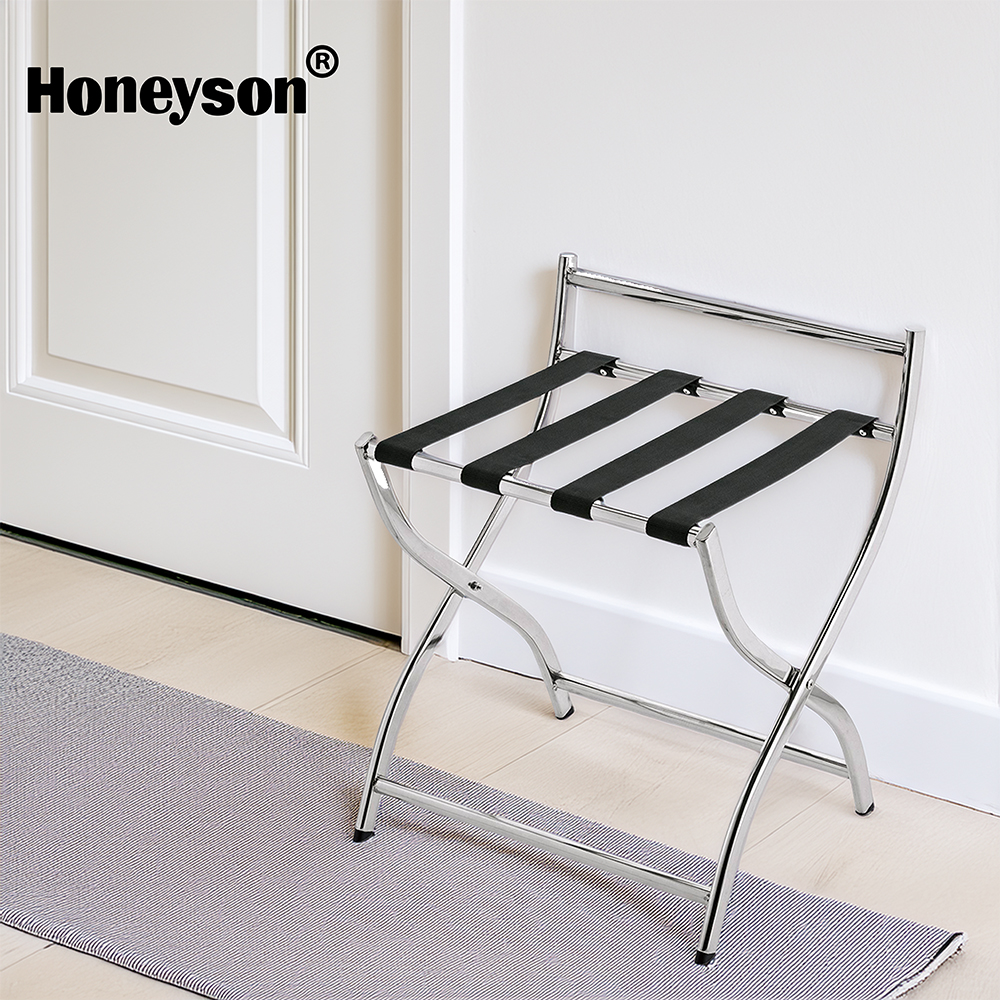
Wobble in a luggage rack typically originates from loose joints, misaligned frames, or inadequate welds at critical connection points. When metal tubing meets at corners or load-bearing intersections, even minor gaps of 2–3 millimeters can introduce lateral movement under load. The OEM luggage rack frame must maintain rigid geometry during use, yet manufacturing variance in tube diameter, cut length, or joint preparation can create slack that accumulates through assembly stages. Begin inspection by checking all welded seams with a visual assessment under lighting, then use a straightedge or dial indicator to measure deflection at mid-span and corner nodes.
Fastener Torque and Bolt Connection Failures
Many hotel luggage rack designs rely on bolted connections for modularity and cost efficiency. If fastening sequences are not properly controlled or torque specifications are not enforced during assembly, bolts may not achieve sufficient clamp load to prevent micro-movement. Repeated load cycling loosens undertorqued fasteners progressively, eventually creating visible wobble. Verify that assembly procedures specify torque values in foot-pounds or newton-meters, that torque wrenches are calibrated monthly, and that workers are trained to apply sequential torque patterns (typically star or cross patterns for multi-bolt joints). Inspect sample units from the suspect batch by attempting to rotate bolts with a wrench; if any bolt spins freely or turns more than 15 degrees before resistance, the batch likely contains assembly process failures.
Analyzing Folding Mechanism Failures and Collapse Points
Hinge Pin Alignment and Friction Issues
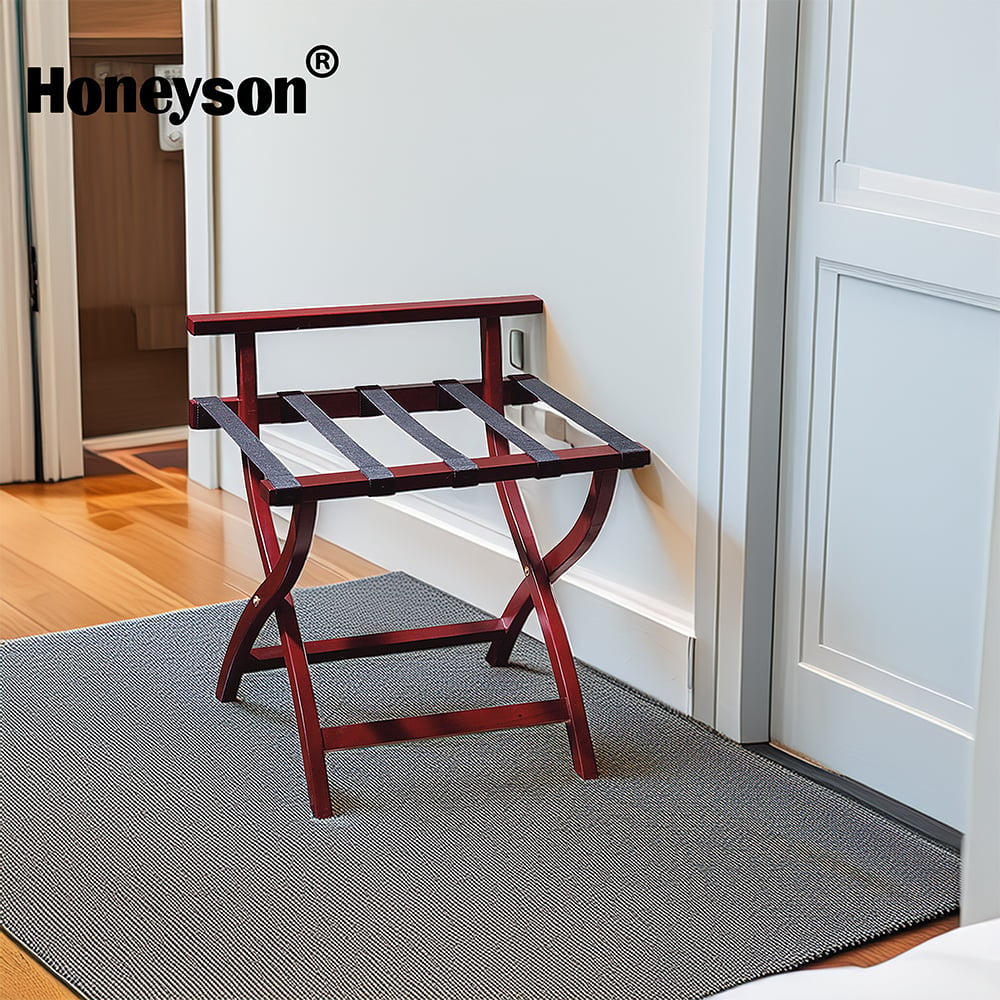
Folding luggage rack designs depend on precisely aligned hinge pins that support repeated open-close cycles without binding or excessive play. If hinge bores are drilled off-center, or if pin diameter varies beyond tolerance, the folding mechanism becomes stiff or loose. A stiff hinge resists full closure, while excessive play allows the rack to collapse unexpectedly during use or transport. Measure hinge bore diameter on suspect units using a bore gauge and compare against the design specification. Check that pins are straight by rolling them across a flat surface; any visible wobble or wear flats indicate manufacturing defect. If multiple units in a batch show identical misalignment patterns, suspect a tooling or setup issue in the hinge drilling operation.
Material Hardness and Spring Function Degradation
Folding luggage rack frames often incorporate spring clips or tension elements to hold the rack open at the correct angle and prevent unwanted collapse. If these springs are fabricated from material with insufficient hardness, they lose elastic properties over time or under thermal stress, causing the rack to fold prematurely or remain partially closed. Material hardness testing using a Rockwell or Brinell scale can confirm whether spring stock meets specification. If material lots fail hardness testing, coordinate with the material supplier to trace the cause: improper heat treatment, incorrect alloy composition, or mislabeled stock. Request a material certificate of analysis and perform hardness tests on a sample from each material lot delivered to the manufacturing facility.
Implementing Systematic Root Cause Investigation and Corrective Actions
Documented Failure Analysis Protocol
Begin with a structured failure analysis worksheet that documents the failure mode observed in each defective unit, the failure location, and the batch and production date. Photograph defects from multiple angles and record measurements of wobble (lateral deflection in millimeters at the load surface) and folding resistance (force required to open or close in kilograms or pounds). Sort defective units by production shift or assembly line to identify whether failures cluster within specific time windows, suggesting operator training gaps or equipment drift. Contact the OEM luggage rack production team to retrieve tool calibration records, material lot certificates, and worker sign-off sheets for the suspect batch. This documentation forms the evidence trail for root cause determination.
Corrective Action and Batch Disposition
Once the root cause is confirmed—whether misaligned welding, undertorqued fasteners, material hardness failure, or hinge bore misalignment—implement targeted corrective actions. If the issue is process-based, retrain assembly staff, recalibrate torque wrenches, or adjust equipment parameters. If material-related, reject the offending lot, establish a qualified supplier list for critical components, and implement incoming material inspection. For affected units already manufactured, assess whether rework is economically viable or whether the batch should be scrapped. Many OEM suppliers choose to rework units by re-welding, re-torquing, or replacing defective subassemblies rather than discarding them entirely. Document all corrective actions and preventive measures, then conduct a follow-up production run of the corrected batch to confirm that the failure mode does not recur.
FAQ
Why does a luggage rack wobble immediately after delivery?
Immediate wobble typically indicates loose bolts, inadequate welds, or misaligned frame tubing present from the factory. Manufacturing defects accumulate during stamping, welding, and assembly stages. If Quality Assurance did not catch these issues during final inspection or load testing, the defect reaches the customer. Implement load testing on every unit or a statistically valid sample before shipment to catch wobble before delivery.
Can a folding luggage rack be repaired if the hinge fails?
Yes, hinge failures can often be repaired by removing the hinge pin, inspecting the bore for wear, and installing a new pin or oversized pin if bore damage is minor. However, if the hinge bore is stripped or the frame is cracked, replacement of the entire hinge assembly or the affected frame section may be necessary. The folding luggage rack design determines whether hinge repair is practical or if replacement is the better option.
How often should torque specifications be verified during luggage rack assembly?
Torque verification should occur during worker training, monthly during production through audits, and whenever assembly process changes are made. For hotel luggage rack batches, random audits of fastener torque on finished units provide early warning of process drift. Calibrate torque wrenches according to manufacturer schedules, typically every six to twelve months, to ensure accuracy and maintain control of fastener preload.
