
 EN
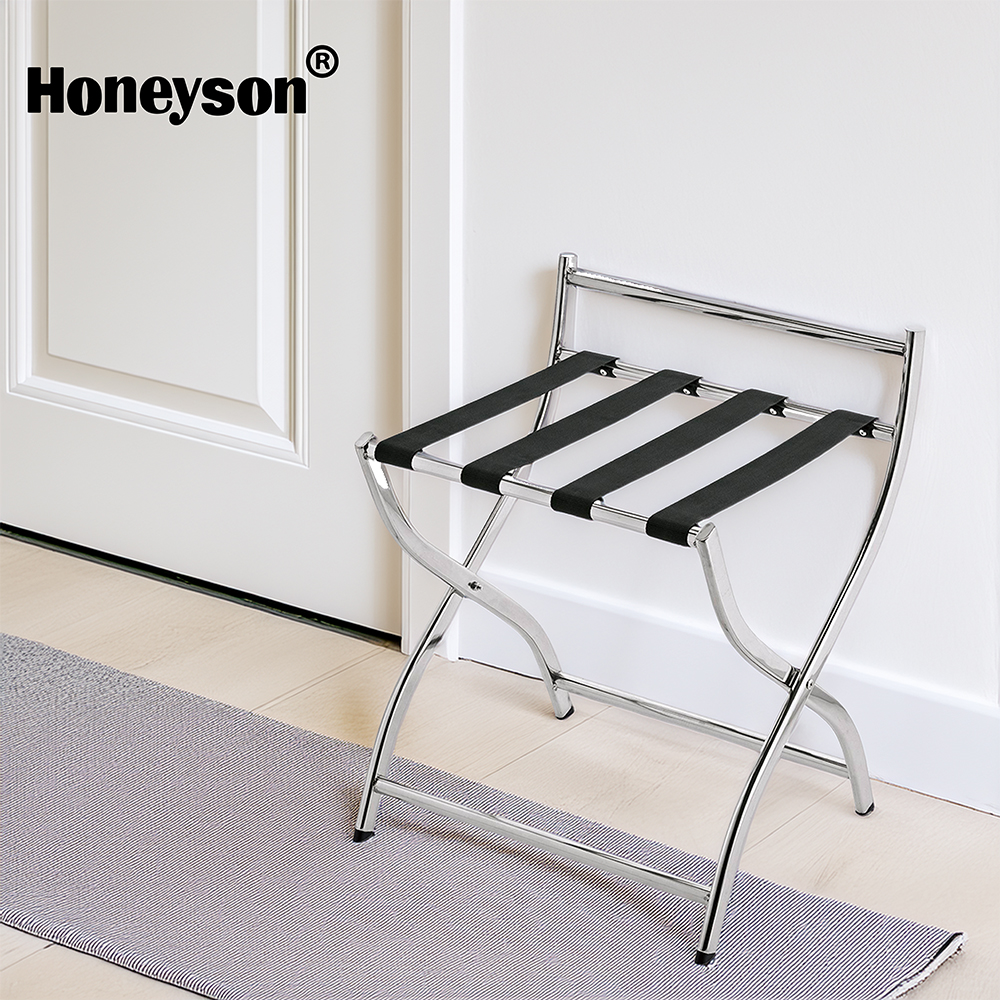
The durability of a luggage rack depends far more on strap quality than most facility managers realize. When guests place their heavy suitcases on a hotel luggage rack, the webbing and stitching absorb enormous stress that determines whether the piece survives months or years of daily use. Poor stitching patterns unravel under tension, webbing degrades from friction and UV exposure, and weak attachment points become failure zones. Understanding these material and construction factors is essential for anyone responsible for purchasing, maintaining, or specifying luggage rack equipment in hospitality, airline, or institutional settings.

Quality strap construction transforms a luggage rack from a temporary fixture into a reliable asset. The visible difference between economy and premium models lies in how straps attach to the frame, how webbing is layered, and which stitching methods resist years of guest interaction. This article explores the specific strap quality factors that extend rack lifespan, affect maintenance costs, and impact guest satisfaction across different luggage rack types.
Stitching Methods and Their Impact on Durability
Lock Stitching Versus Chain Stitching
Lock stitching creates a secure knot between two threads at each stitch point, making it nearly impossible for a single broken thread to unravel an entire seam. This method dominates high-quality hotel luggage rack production because it withstands repetitive stress without cascading failures. Chain stitching, by contrast, loops a single thread through each stitch; if one thread breaks, the entire seam can collapse rapidly. A folding luggage rack subjected to constant opening and closing demands lock stitching to prevent catastrophic strap failure that renders the entire unit unusable.
Seam Density and Thread Quality
Professional manufacturers specify seam density in stitches per inch, typically ranging from 10 to 16 for load-bearing straps on premium models. Higher density increases thread overlap and distributes load across more anchor points, reducing stress concentration on individual stitches. Thread material also determines longevity; polyester outperforms cotton in moisture resistance and UV stability, critical for OEM luggage rack units exposed to varying warehouse and transportation environments. Stitching that combines high density with quality polyester thread can withstand 50,000 or more use cycles without visible degradation.
Webbing Composition and Environmental Resistance
Material Selection for High-Traffic Environments
Webbing composed of nylon or polypropylene resists moisture, mildew, and UV breakdown far better than cotton alternatives. Hotel luggage racks in humid climates face constant exposure to damp clothing and luggage, making moisture resistance essential for preventing rot and odor accumulation. OEM luggage rack specifications increasingly demand synthetic webbing because it maintains structural integrity through multiple wash cycles and extended storage periods. A folding luggage rack stored in variable-temperature environments requires webbing that flexes without cracking, a property inherent to modern synthetic blends rather than natural fibers.
Webbing Width and Load Distribution
Wider webbing distributes suitcase weight across a larger surface area of the frame, reducing localized pressure that creates stress points. Industry standards for hotel luggage racks typically specify webbing width between 2 and 3 inches to balance material cost with functional durability. Narrower straps concentrate load into thin lines, causing permanent deformation of the frame or tearing of the webbing itself when guests place heavy luggage incorrectly. Premium OEM luggage rack designs use graduated webbing width, with wider sections at primary support points and narrower sections at less critical areas, optimizing material efficiency while maintaining safety margins.
Construction Details That Extend Lifespan
Strap Attachment Points and Reinforcement
The junction where webbing meets the frame represents the highest-risk failure point on any luggage rack. Professional manufacturers reinforce these zones with additional stitching, backing plates, or fold-over techniques that increase attachment surface area and prevent tearing. A folding luggage rack must withstand repeated flexing at these attachment points each time the unit opens and closes, making reinforcement non-negotiable for units intended to last multiple years. Hotel luggage racks in luxury properties often feature reinforced corners with triangular or rectangular backing pieces that absorb stress before it reaches the webbing itself.
Hem Finishing and Edge Treatment
Raw or poorly finished webbing edges fray under guest handling, creating visible deterioration and eventual unraveling that compromises structural integrity. Professional finishing involves folding webbing edges inward and stitching the fold, a process that eliminates loose fibers and distributes load evenly across the entire webbing width. OEM luggage rack manufacturers specify edge finishing as a quality requirement because it prevents the aesthetic decay that triggers premature replacement even when structural function remains intact. This detail separates economy models from hospitality-grade units and directly influences the total cost of ownership over a five-year deployment cycle.
FAQ
What causes stitching to fail in a luggage rack?
Stitching fails when seam density is too low, thread quality is poor, or the stitching method lacks lock security. Repeated stress from heavy luggage, combined with environmental moisture and temperature fluctuations, accelerates thread degradation. Cheap chain stitching fails catastrophically when a single thread breaks because the entire seam unravels, whereas lock stitching on premium luggage rack designs isolates each stitch independently and prevents cascading failure.
How does webbing material affect hotel luggage rack performance?
Synthetic webbing resists moisture, UV damage, and mildew far better than cotton, extending the usable lifespan of hotel luggage racks in humid or outdoor settings. Polypropylene and nylon maintain structural integrity through multiple cleaning cycles and environmental exposure, while cotton weakens when exposed to dampness. OEM luggage rack specifications increasingly mandate synthetic webbing because the durability and maintenance advantages justify slightly higher material cost over the equipment lifecycle.
Should I prioritize webbing width or stitching density for a folding luggage rack?
Both factors matter equally for a folding luggage rack intended for heavy use. Wider webbing distributes load more effectively, while higher stitch density ensures seams remain intact under repeated stress. Premium models combine both attributes: wider webbing between 2.5 and 3 inches with 14 to 16 stitches per inch in lock-stitch configuration. This combination maximizes durability without excessive weight or material waste, making it the standard for hospitality-grade luggage rack products.
