
 EN
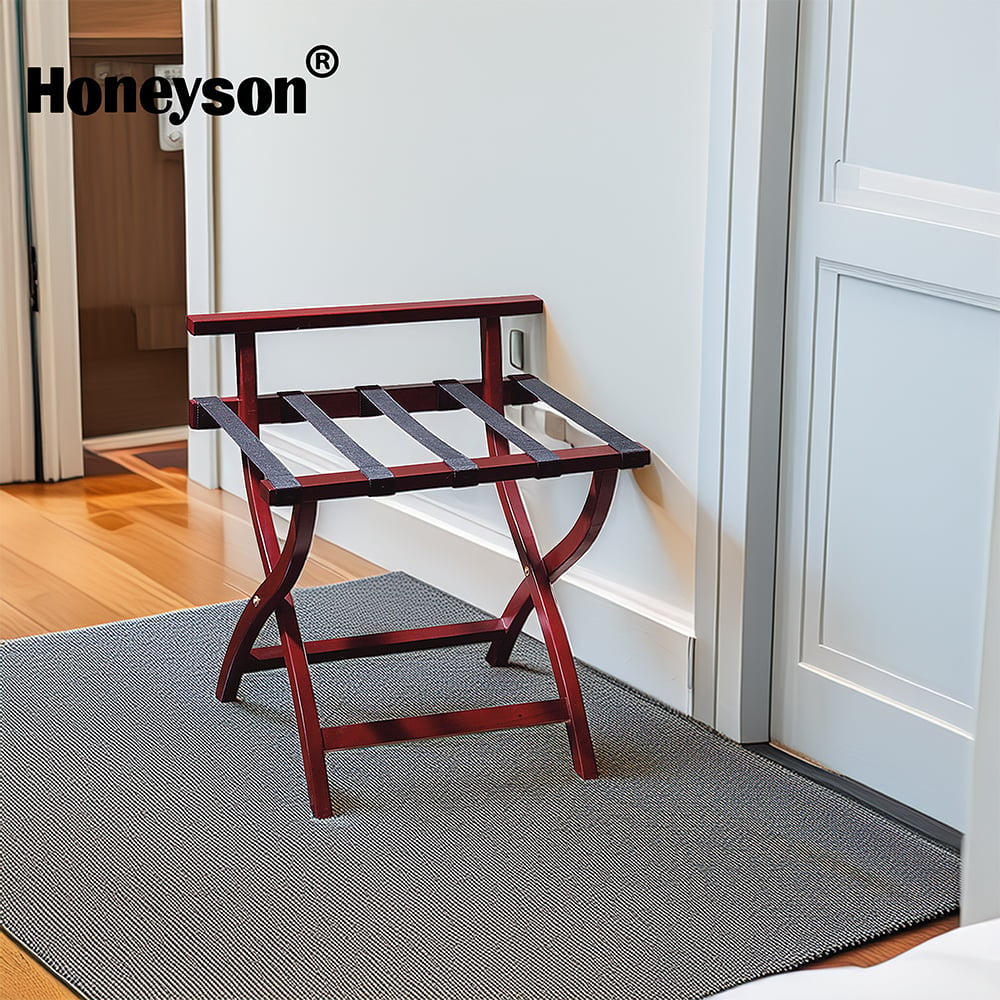
Selecting the right luggage rack for confined spaces requires careful planning and understanding of dimensional constraints. Whether you operate a boutique hotel, manage a compact suite, or need storage solutions in a small room, the fit and functionality of your luggage rack directly impact guest experience and operational efficiency. A poorly sized unit consumes valuable floor space, creates bottlenecks near entry points, and may even obstruct door swing or passage. Conversely, choosing a correctly proportioned luggage rack maximizes usability while respecting the architectural limitations of tight quarters.
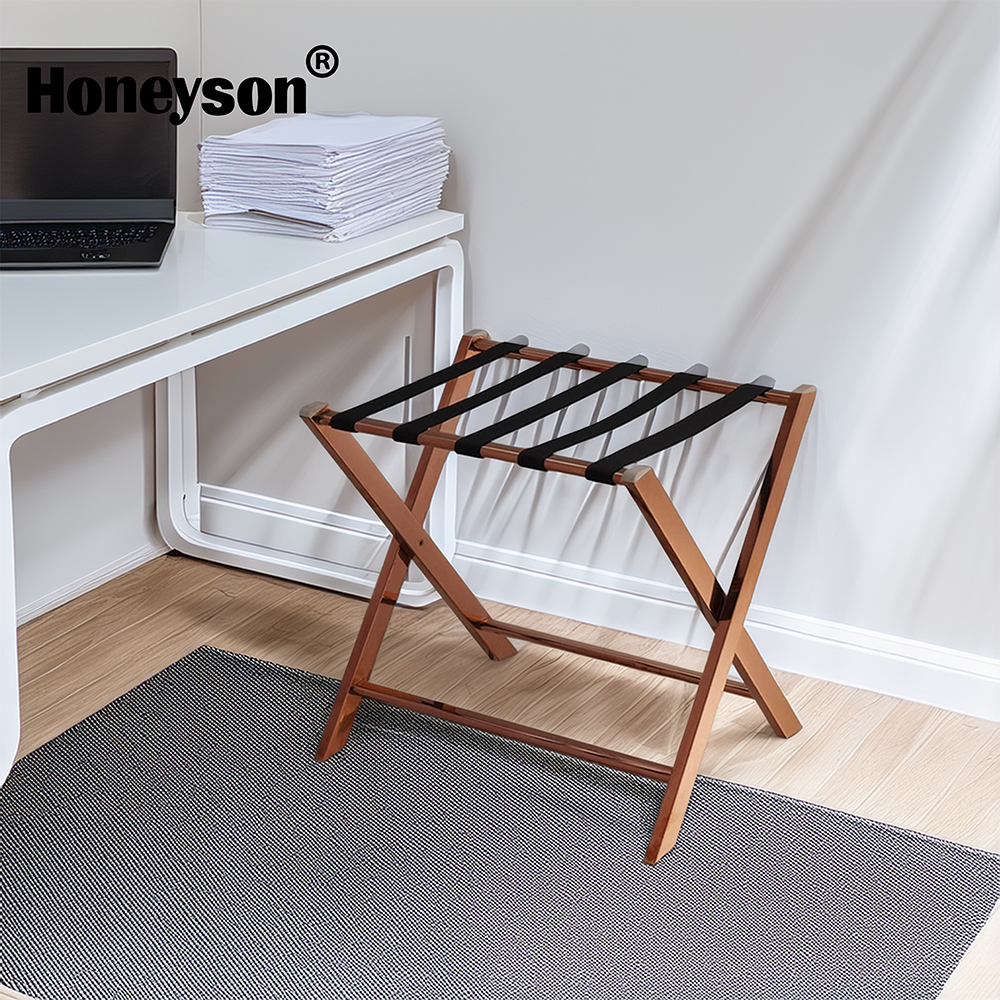
Space limitations present both a challenge and an opportunity for hospitality designers and facility managers. Small rooms, compact suites, and efficient closet installations demand a hotel luggage rack that delivers function without overwhelming the layout. Understanding the relationship between room dimensions, guest flow patterns, and luggage rack specifications ensures you invest in equipment that serves its purpose without creating friction. This guide explores sizing principles, configuration options, and practical installation strategies that help you deploy the right luggage rack solution in constrained environments.
Understanding Space Constraints and Room Dimensions
Measuring Available Floor Space
Before selecting any folding luggage rack or stationary model, you must establish accurate measurements of the installation zone. Small rooms typically offer between 80 and 120 square feet of total floor area, leaving minimal room for oversized furniture. Identify the intended placement location—most often near the entry, at the foot of the bed, or inside a closet—and measure the width, depth, and height available after accounting for door swing, wall protrusions, and existing fixtures. A standard OEM luggage rack measures approximately 24 to 30 inches wide and 18 to 24 inches deep when assembled, yet these dimensions can vary significantly based on design and material specification.
Calculating Clearance Requirements
Clearance space around your luggage rack is as critical as the unit itself. Guests must be able to open suitcases fully without striking walls or adjacent furniture, and housekeeping staff must access the floor beneath for cleaning. For placement near an entry door, ensure a minimum of 3 to 4 feet of clear floor space in front of the luggage rack to prevent collision hazards when doors swing open. When installing a folding luggage rack in a closet, account for the depth of the closet interior plus 12 to 15 inches of additional clearance if the closet doors swing inward. These clearance calculations directly influence whether a standard-size luggage rack or a compact variant will serve your space effectively.
Selecting Luggage Rack Types for Compact Spaces
Folding Luggage Rack Advantages
A folding luggage rack offers exceptional versatility in small rooms and suites because it collapses to a fraction of its operational size for storage. When fully collapsed, most folding luggage rack models occupy only 3 to 6 inches of depth and can stand upright in a closet, behind a door, or within a storage cabinet. This flexibility allows housekeeping to deploy the luggage rack only when guests arrive and remove it during turnover, preserving precious floor space throughout the day. A quality folding luggage rack maintains structural integrity across multiple open-close cycles and supports typical guest luggage loads of 100 to 150 pounds, making it an economical choice for boutique properties and small suites where space efficiency drives operational decisions.
Hotel Luggage Rack Configuration Options
Traditional hotel luggage rack designs come in several configurations suited to different room types and guest expectations. A fixed wall-mounted hotel luggage rack eliminates floor footprint entirely, anchoring directly to the wall above or beside the closet entrance. This installation strategy works well in compact rooms where every square foot of clear floor space matters. Alternatively, a compact floor-standing hotel luggage rack with a reduced footprint—typically 20 to 24 inches wide—accommodates smaller suites while maintaining the visual presence guests associate with premium accommodations. Some OEM luggage rack suppliers offer models specifically engineered for closet installation, featuring narrower profiles and reinforced rails designed for semi-enclosed mounting within standard closet dimensions.
Installation Strategies for Optimal Fit
Closet and Wall-Based Placement
Closet installation represents an ideal solution when floor space in small rooms is severely limited. A properly selected folding luggage rack or compact OEM luggage rack fits comfortably within most standard closet dimensions of 24 to 36 inches wide and 48 to 72 inches deep. Mounting considerations include ensuring the closet floor can support the weight of a fully loaded luggage rack—typically 150 to 300 pounds depending on construction materials—and that ventilation remains adequate to prevent moisture accumulation around stored luggage. When installing a hotel luggage rack within a closet that features double-hinged or sliding doors, verify that the rack's assembled depth does not interfere with door operation when fully closed. Some properties choose to position the luggage rack slightly inside the closet opening rather than at the rear, improving accessibility and reducing door interference risk.
Optimizing Entry and Circulation Pathways
When a luggage rack must occupy a visible location near the room entrance, position it to create natural traffic flow rather than obstruct it. Placing a folding luggage rack or hotel luggage rack 18 to 24 inches away from the entry door allows guests to enter the room fully before encountering the unit, reducing the sensation of spatial constraint. In suites with dual entry points—a main door and a secondary passage—positioning your luggage rack opposite the secondary entry eliminates circulation bottlenecks. Consider sightline angles as well; a compact OEM luggage rack positioned to the side of the entry preserves an unobstructed view into the room, making the space feel larger even when the unit occupies measurable square footage. This psychological spacing, combined with physical clearance, optimizes perceived room comfort in constrained environments.
FAQ
What dimensions should a folding luggage rack have for a room smaller than 100 square feet?
A folding luggage rack for micro-suites should measure no wider than 24 inches and no deeper than 20 inches when fully assembled, ensuring it occupies less than 4 percent of total room floor area. When collapsed, the folding luggage rack should measure 6 inches or less in depth so it can be stored out of sight during guest stays when not actively in use. Many OEM luggage rack manufacturers now offer compact models specifically designed for very small rooms, featuring narrower top surfaces and space-efficient frame geometry that maintains load capacity despite reduced dimensions.
Can a hotel luggage rack be mounted on walls in small rooms instead of using floor space?
Yes, wall-mounting a hotel luggage rack is an excellent strategy for small rooms when structural integrity can be confirmed. Most walls can support a wall-mounted luggage rack provided it is mounted into studs or reinforced with heavy-duty anchors rated for 150+ pounds of distributed weight. A wall-mounted hotel luggage rack installed 36 to 48 inches above the floor keeps luggage accessible while eliminating any floor footprint, making it ideal for boutique properties where premium use of space justifies the installation investment and guest convenience of a always-ready luggage rack solution.
How do I know if a specific OEM luggage rack will fit my room's closet?
Measure your closet's interior width, depth, and height, then compare these dimensions against the OEM luggage rack specifications provided by the manufacturer. Most OEM luggage rack models are available in standard configurations, but verify that the assembled depth of your chosen model plus 12 inches of operational clearance does not exceed your closet's total depth. Confirm also that the luggage rack height allows for luggage to be placed on top without striking shelving or the closet ceiling, and that the unit's footprint does not block closet door operation when the door is fully opened against the adjacent wall.
