
 EN
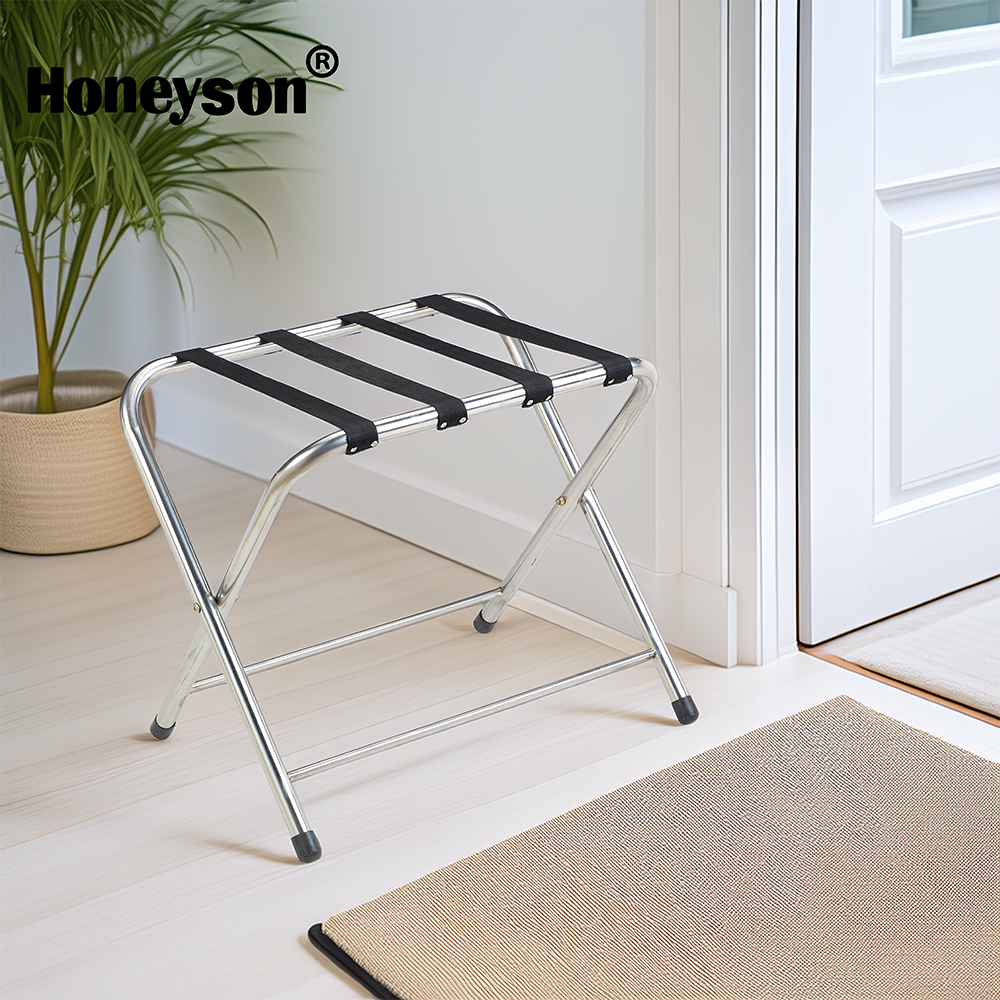
The design of a folding luggage rack represents a critical engineering challenge that blends functionality, durability, and user convenience. A well-engineered luggage rack must support substantial weight while remaining lightweight enough for easy transport and storage. The folding mechanism is the heart of this balance, requiring precision in material selection, joint design, and structural analysis. Understanding the engineering principles behind folding luggage rack systems helps both manufacturers and end-users appreciate the complexity of these seemingly simple devices.
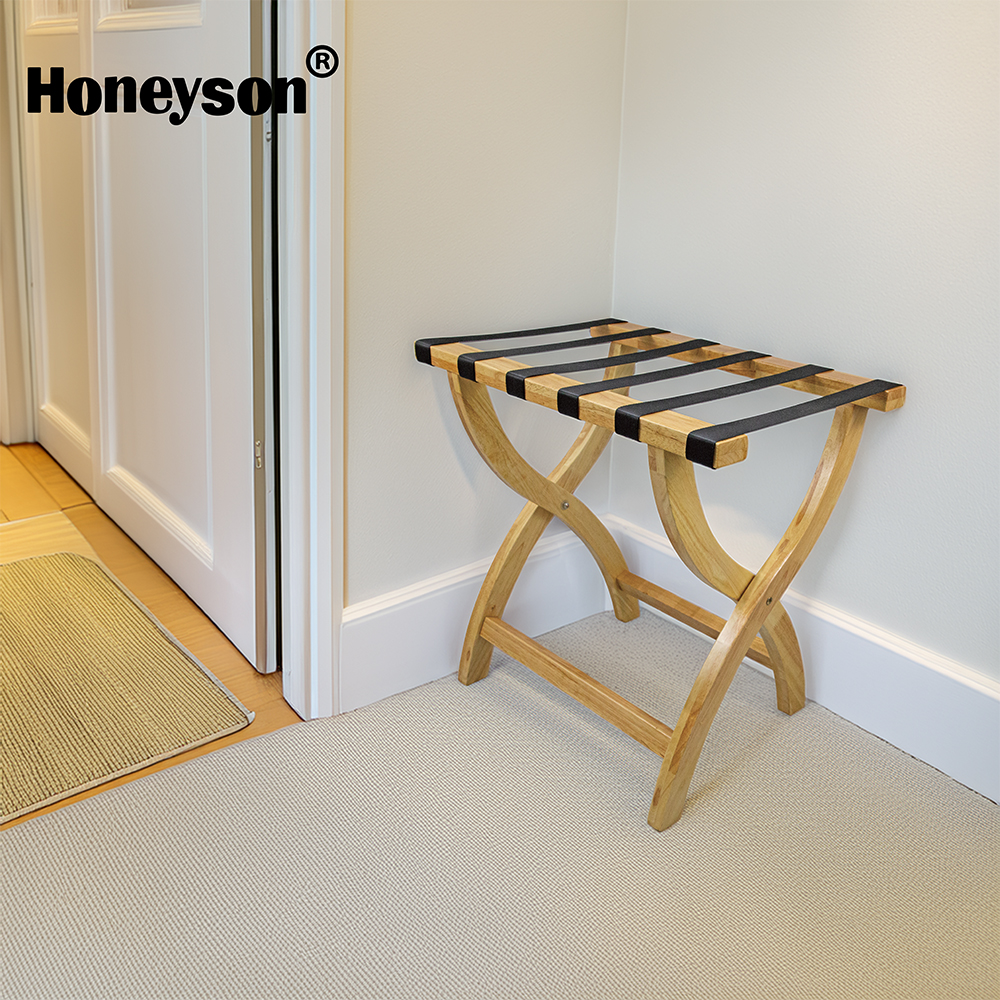
Every hotel luggage rack and OEM luggage rack deployed in commercial environments undergoes rigorous testing to ensure consistent performance over extended product lifecycles. Cycle testing protocols measure how folding mechanisms endure repeated opening and closing operations, simulating years of use in accelerated timeframes. These expectations drive design decisions at every stage, from material choice to joint reinforcement techniques. Manufacturers must balance cost efficiency with reliability, ensuring that both budget-conscious hospitality operations and premium OEM partners receive products capable of meeting industry standards.
Folding Mechanism Design Fundamentals
Material Selection and Joint Design
The foundation of any folding luggage rack design begins with material selection. Steel, aluminum, and composite materials each offer distinct advantages in weight, strength, and cost profiles. Steel provides superior strength and durability but adds weight; aluminum reduces mass while maintaining adequate rigidity; composites offer lightweight benefits but require careful fatigue analysis. The joints connecting frame segments must permit smooth articulation while resisting permanent deformation or play. Hinges, pins, and locking mechanisms are engineered to distribute stress across contact surfaces, minimizing localized wear that could compromise the folding action over thousands of cycles.
Structural Load Path Analysis
Effective folding luggage rack design requires thorough load path analysis to understand how weight transfers through the structure when supporting luggage. When a guest places a suitcase on a hotel luggage rack, forces must be safely transmitted through the frame to the support points. The folding mechanism segments must maintain alignment even under eccentric loading, preventing torsional stress that weakens joints. Engineering models simulate various loading scenarios—centered loads, distributed weights, and off-center placements—to verify that stress remains within material limits and that no point becomes a failure initiator.
Cycle Testing Standards and Expectations
Industry Test Protocols
Standard cycle testing for OEM luggage rack and hotel luggage rack applications follows established protocols that reflect real-world usage patterns. Most commercial testing standards specify 10,000 to 50,000 complete open-close cycles, depending on the expected service environment and manufacturer specifications. Each cycle includes controlled extension and retraction of the folding mechanism, with periodic load application to simulate actual guest use. Environmental variations such as temperature extremes, humidity exposure, and salt spray are often integrated into comprehensive test programs, particularly for hospitality venues in coastal regions or extreme climates.
Performance Criteria and Acceptance Thresholds
Cycle test success is measured against multiple performance criteria. Mechanical resistance to folding and unfolding must remain within acceptable force ranges—typically 10 to 20 pounds—throughout the test duration, ensuring guests do not experience deteriorating ease of use. Visual inspection tracks whether welds, rivets, or bolted connections show crack initiation or permanent deformation. Surface finishes are assessed for corrosion, paint adhesion, and cosmetic degradation. Most manufacturers set acceptance thresholds requiring zero functional failures or safety-critical defects after the full cycle count. A folding luggage rack that passes such rigorous testing demonstrates engineering competence and reliability worthy of demanding commercial deployment.
Design Optimization for Durability
Wear Reduction Techniques
Extended folding luggage rack longevity depends on proactive wear reduction strategies built into the design phase. Surface treatments such as powder coating, chrome plating, or anodizing protect underlying materials from corrosion that accelerates joint degradation. Lubrication-friendly bearing surfaces and sealed joint designs minimize dust infiltration and friction buildup. Reinforcing high-stress zones with gussets, thickened sections, or additional fastening points redirects forces away from vulnerable connection areas. OEM luggage rack designers often incorporate sacrificial wear pads at pivot points, allowing controlled surface degradation that preserves the critical structural geometry underneath.
Feedback Integration and Continuous Improvement
Field performance data from hotel luggage rack deployments provides invaluable feedback for design refinement. Manufacturers track failure modes, warranty claims, and user feedback to identify stress concentrations or joint issues overlooked in initial analysis. Each product generation incorporates lessons learned, strengthening weaker design elements and optimizing successful features. Cycle test expectations evolve as technology advances and industry standards tighten, pushing manufacturers to invest in better materials, manufacturing precision, and analytical validation. The interplay between testing rigor and design evolution ensures that modern folding luggage racks achieve reliability levels unimaginable in earlier decades of commercial hospitality equipment.
FAQ
What cycle test count should a commercial luggage rack achieve?
Most commercial hotel luggage rack and OEM luggage rack applications target 20,000 to 50,000 complete open-close cycles without functional failure. The specific requirement depends on expected usage frequency, venue type, and manufacturer quality objectives. High-end hospitality properties may demand 50,000 cycles or more, while budget-focused deployments might accept 10,000 cycles. Manufacturers should clearly document their cycle test achievements and any environmental conditions included in testing protocols.
How do environmental factors affect folding luggage rack durability?
Environmental exposure significantly impacts folding luggage rack longevity. Humidity and salt spray accelerate corrosion of metal components, degrading joint surfaces and weakening structural connections. Temperature extremes can cause material embrittlement or expansion mismatches that create play in folding mechanisms. Comprehensive testing of OEM luggage rack and hotel luggage rack designs includes salt spray corrosion tests, humidity chambers, and thermal cycling protocols to validate performance across geographic regions and seasonal variations.
What design features indicate a quality folding luggage rack?
A well-engineered folding luggage rack exhibits smooth, consistent folding action with minimal force variation across its operational life. Visible quality markers include neat welds without spatter or cracks, uniformly applied surface finishes, precise gap tolerances at joints, and reinforced connection zones. Documentation of cycle test results, material certifications, and corrosion resistance ratings provides objective evidence of engineering rigor. Premium OEM luggage rack and hotel luggage rack offerings typically include comprehensive warranties and detailed specification sheets reflecting the manufacturer's confidence in durability.
