
 EN

Running a sample check on a luggage rack before approving bulk orders is a critical quality control step that protects your business from costly mistakes. Whether you're sourcing hotel luggage racks, OEM luggage rack components, or folding luggage rack models, evaluating a prototype or sample unit helps you verify functionality, durability, and compliance with your specifications. This process minimizes defects in production runs and ensures that your end customers receive products that meet expectations and regulatory standards.
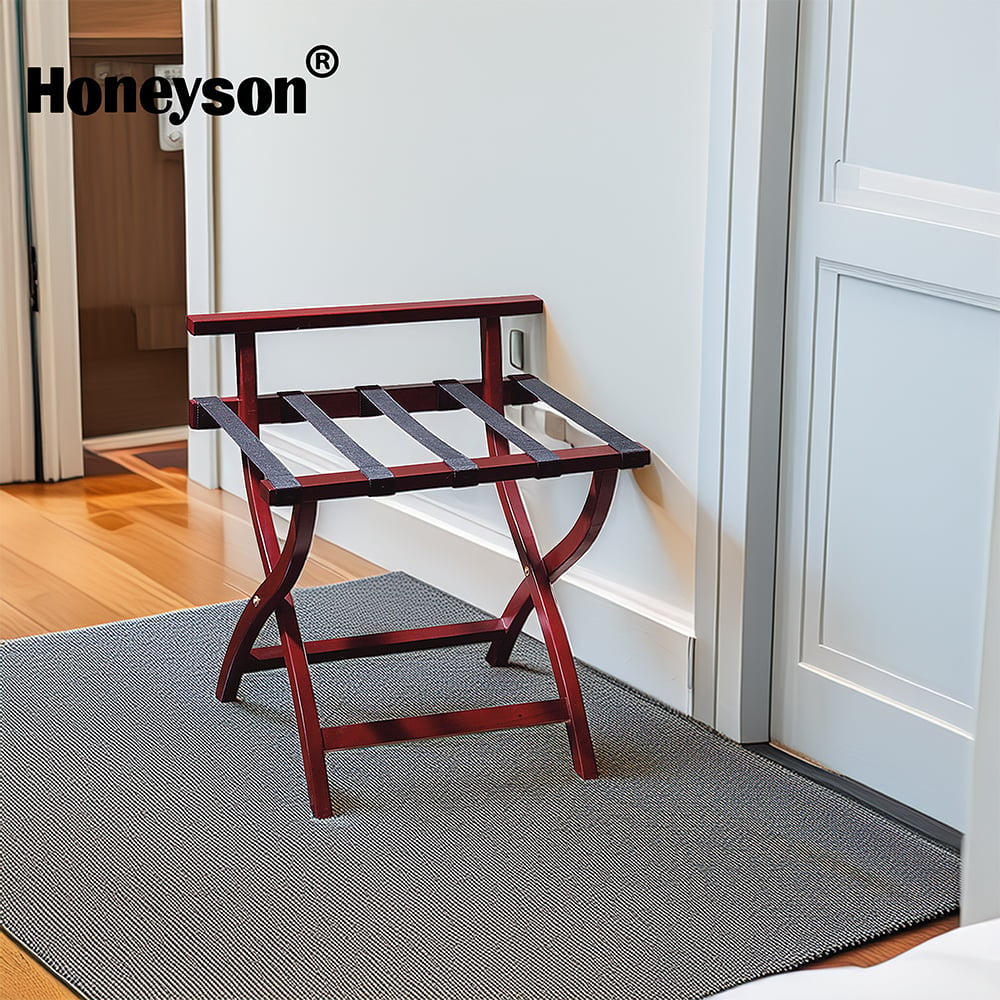
The sample check process requires a systematic approach that covers structural integrity, material quality, assembly precision, and performance under realistic use conditions. By following a comprehensive evaluation framework, you can confidently approve orders knowing that the product quality aligns with your purchasing requirements and end-user needs. This guide walks you through each phase of a professional sample check for any luggage rack type.
Understanding the Purpose of Sample Checks
Why Sample Checks Matter in Luggage Rack Procurement
A sample check serves as your first line of defense against quality issues that could damage your reputation or create liability concerns. When you receive a hotel luggage rack sample or an OEM luggage rack prototype, you have the opportunity to assess whether the manufacturer understands your specifications and can consistently deliver at that level. This early validation prevents expensive bulk shipments from arriving with hidden defects that would require rework, returns, or customer complaints.
For folding luggage rack models, sample checks are especially important because collapse mechanisms and locking features require hands-on testing that drawings and certificates alone cannot verify. By thoroughly examining the sample, you establish a baseline for quality that the supplier must maintain throughout production. You also create documentation that protects both parties if disputes arise later about whether the delivered goods match the approved sample.
Key Stakeholders in the Sample Evaluation Process
Multiple departments should participate in sample checks to ensure comprehensive assessment. Your procurement team verifies that the sample matches your purchase order specifications, while your operations or warehouse team tests functionality and ergonomics. Engineering teams evaluate structural design and material composition, and quality assurance personnel check for defects, surface finishes, and assembly consistency. For hotel luggage racks, your housekeeping or facilities team can provide practical feedback on usability in real settings. Involving end-users or specialists in the OEM luggage rack supply chain ensures that the sample meets actual performance requirements, not just theoretical ones.
Conducting a Detailed Physical Examination
Structural Integrity and Material Assessment
Start your sample check by examining the overall structure of the luggage rack. Inspect all welds, joints, and fasteners for defects, cracks, or loose connections. Run your hands along every surface to check for sharp edges, burrs, or rough finishes that could injure users or damage guest luggage. For hotel luggage racks, look closely at the support frame and verify that all metal components feel solid and secure when pressure is applied. Examine the material thickness against your specifications using calipers or measuring tools to confirm that the manufacturer did not substitute cheaper materials.
Check the finish quality of the luggage rack sample. If your specifications call for powder coating, chrome plating, or paint, verify that coverage is even, consistent, and free from drips, peeling, or discoloration. Test the durability of the finish by running a cloth across surfaces to confirm adhesion. For folding luggage rack models, pay special attention to hinge areas and fold points where material stress concentrates. Bend or collapse the sample yourself to feel for smoothness in the mechanism and to detect any grinding, squeaking, or resistance that indicates poor manufacturing precision.
Dimensional Accuracy and Fit Specifications
Measure every critical dimension of your luggage rack sample using appropriate tools such as calipers, measuring tapes, or gauges. Compare measurements against your technical specifications and contract drawings. Check height, width, depth, shelf dimensions, and weight capacity ratings if applicable. For OEM luggage rack components, verify that connection points, mounting holes, and interface dimensions are accurate to allow seamless integration with related products. Even small deviations in critical dimensions can cause assembly problems downstream or prevent the rack from fitting properly in intended spaces.
Examine how the folding luggage rack opens and closes to ensure smooth action without binding or misalignment. Check that all fasteners are present, correctly sized, and tightened to specifications. Verify that any locking mechanisms or safety features engage firmly and cannot be accidentally released. If the luggage rack includes shelves or support surfaces, test that they are level and securely attached, and that they do not shift or rattle when pressure is applied.
Testing Performance and Safety Features
Weight Capacity and Functional Testing
Place test weights on the luggage rack sample to verify that it meets your stated weight capacity without bending, shifting, or failing. Use incremental loading starting from 50 percent of rated capacity, then increase to full capacity. For a hotel luggage rack or folding luggage rack, observe whether the frame remains stable on level surfaces and whether any welded joints show stress marks or separation. If the luggage rack includes wheels or casters, roll it in different directions and verify that it glides smoothly and does not tip during normal handling.
Test any locking mechanisms, braking systems, or folding actions repeatedly to confirm that they function reliably. For OEM luggage rack components, verify that attachment points are strong enough to support the specified load without damage to the mounting surface or fasteners. If applicable, test the luggage rack on different floor surfaces such as carpet, tile, and concrete to ensure stability in real-world conditions. Document any resistance, noise, or performance anomalies that suggest manufacturing or design problems.
Safety Compliance and Risk Assessment
Evaluate whether the luggage rack sample complies with relevant safety standards for your market, such as BIFMA standards for furniture, ASTM guidelines, or local building codes. Check that all edges and components are safe from pinch points or sharp corners that could cause injury. For hotel luggage racks, verify that the design prevents guests from accidentally tipping the rack or becoming trapped between moving parts. Examine the sample for any choking hazards, detachable small parts, or design flaws that could create liability exposure. If the luggage rack must support heavy or awkwardly shaped items, confirm that its design distributes weight safely and prevents shifting.
Request and review the supplier's test certifications, material safety data sheets, and manufacturing quality records for the sample batch. Compare these documents against your contractual requirements to ensure compliance. For folding luggage rack models, verify that the collapse mechanism is not a pinch hazard and that the rack remains stable even when partially folded or in transitional states. Document your safety assessment in writing and photograph any concerns so that you have clear evidence if disputes arise about product safety during later production runs.
FAQ
How long should a luggage rack sample check typically take?
A comprehensive sample check usually requires 2 to 4 hours depending on the complexity of the luggage rack design, the number of functional features, and whether multiple teams need to evaluate it. A simple hotel luggage rack might take 2 hours for basic dimensional and quality checks, while an intricate folding luggage rack with multiple locking mechanisms might require 4 hours or more for thorough functional testing. Building in time for team discussion, photographic documentation, and written evaluation ensures that your sample check produces reliable results and creates clear approval records.
What should I do if the sample fails the quality check?
If your luggage rack sample reveals defects or fails to meet specifications, do not approve the order. Instead, document the specific failures, take photographs, and communicate the issues clearly to the supplier. Request that the OEM luggage rack manufacturer provide a revised sample that addresses each concern. Require the supplier to explain the root cause of the failure and describe corrective actions they will take to prevent the same problems in bulk production. Review the corrected sample with the same rigor before approving any full-scale order, and include corrective action evidence in your contract file.
Should I approve an order if the sample is acceptable?
An acceptable sample gives you confidence to proceed with bulk orders, but approval should be conditional on receiving production units that match the sample exactly. Include language in your contract specifying that delivered goods must match the approved sample in all material respects, and that you retain the right to inspect initial production shipments to verify compliance. Consider implementing first-article inspection programs or receiving inspections on early shipments to confirm that the manufacturer maintains the sample quality standards throughout the full production run of your folding luggage rack or hotel luggage rack order.
