
 EN
Coastal and humid properties face unique challenges when selecting hotel room appliances and guest room equipment. Salt air, moisture, and temperature fluctuations accelerate corrosion and material degradation, making material selection critical for operational longevity and guest satisfaction. Understanding how to evaluate and source appropriate materials directly impacts maintenance costs, asset lifespan, and the overall guest experience in these demanding environments.
When working with suppliers hotel products in these regions, material durability becomes as important as functionality. OEM hotel products designed for coastal applications must incorporate specific material compositions and surface treatments that resist environmental stressors. Selecting the right hotel supplies from informed OEM hotel products manufacturers ensures your property maintains quality standards while reducing replacement cycles and unexpected downtime.
Material Selection for Coastal Environments
Stainless Steel and Corrosion Resistance
Stainless steel stands as the primary material choice for coastal hotel room appliances, but not all grades perform equally in salt-air environments. Grade 304 stainless steel offers basic corrosion resistance, while grade 316 includes molybdenum, providing superior salt-air protection. When sourcing guest room equipment from suppliers, verify the specific grade and thickness, as thinner materials degrade faster despite meeting base material specifications. Many OEM hotel products now specify 316-grade construction for coastal applications, recognizing that the upfront material cost justifies extended service life and reduced maintenance interventions.
Protective Coatings and Surface Treatments
Beyond material grade, protective surface treatments determine how hotel supplies withstand humidity and salt exposure. Electropolishing removes surface iron particles and creates a passive oxide layer that resists corrosion more effectively than standard polishing. Powder coating and specialized marine-grade finishes add an additional barrier, though they require periodic inspection for chips or degradation. Guest room equipment like kettles, trays, and fixtures benefit significantly from these treatments, extending their functional lifespan by several years compared to untreated alternatives. OEM hotel products that combine stainless steel with proper surface treatments represent the best investment for coastal properties.
Humidity-Resistant Materials and Functional Design
Polymer and Composite Components
Modern hotel room appliances increasingly incorporate engineered polymers and composites that resist moisture absorption and mold growth. High-performance plastics used in guest room equipment handles, trays, and housings maintain dimensional stability and appearance in humidity levels exceeding 80 percent. These materials also reduce galvanic corrosion risk when in contact with metal components, a common failure mode in coastal hotel supplies. Suppliers hotel specialists now design hybrid products combining stainless steel where contact risk exists with moisture-resistant polymers in non-contact zones, optimizing both durability and cost efficiency.
Ventilation and Drainage Design
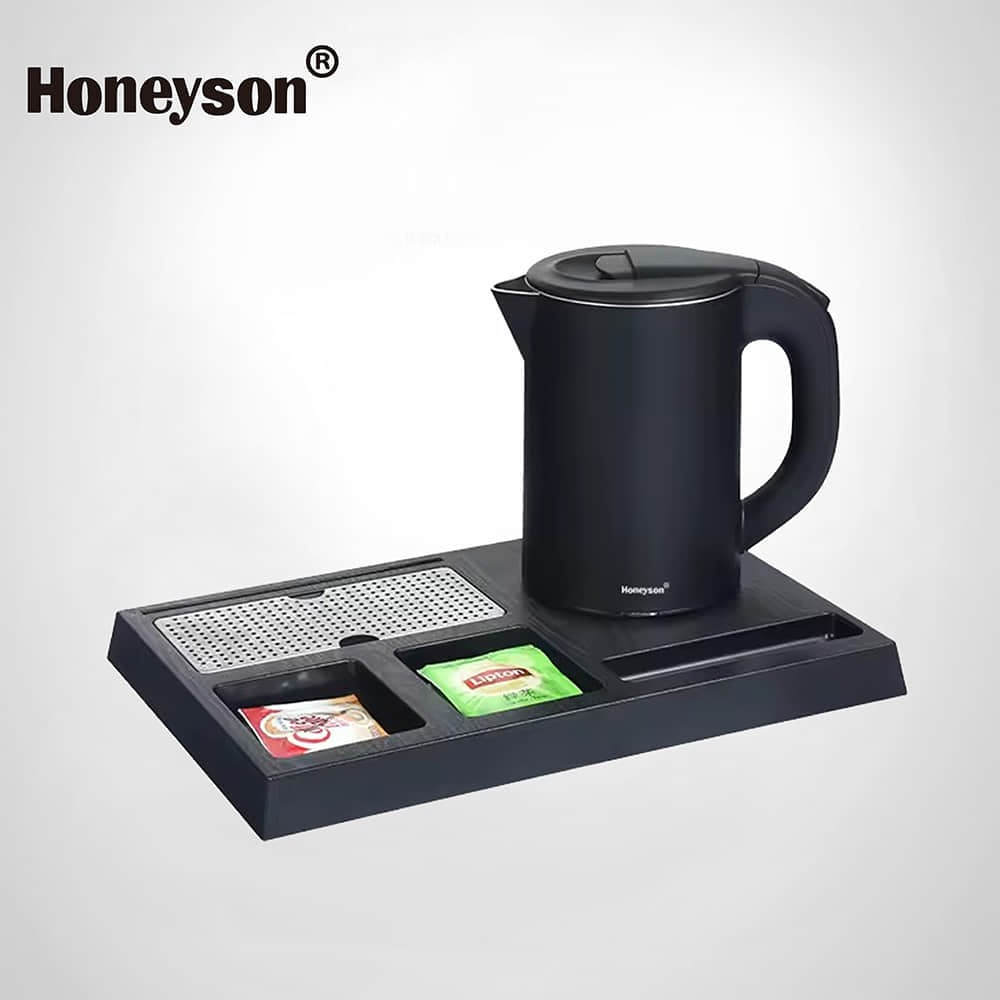
Material selection alone cannot guarantee longevity without proper design consideration for moisture management. OEM hotel products engineered for humid environments incorporate drainage channels, ventilation ports, and elevated bases that prevent water pooling and condensation accumulation. Guest room equipment such as kettle sets with integrated trays benefit from angled surfaces and bottom drainage holes that prevent standing water and mold formation. When evaluating hotel supplies from suppliers, examine not just material composition but also geometric design features that actively address humidity challenges rather than passively resisting them.
Practical Implementation and Supplier Partnership
Specification Development and Testing
Developing robust material specifications requires collaboration with experienced suppliers hotel who understand coastal operating conditions. OEM hotel products should undergo salt-spray testing and humidity chamber exposure following ASTM B117 or equivalent standards before deployment. Guest room equipment selections benefit from case studies showing performance history in similar climate zones, allowing properties to make informed decisions based on real-world data. Many leading suppliers now provide accelerated aging reports and warranties specifically tailored to coastal environments, giving hotels confidence in their material investments and long-term asset planning.
Maintenance Protocols and Material Care
Even premium materials require appropriate maintenance in coastal settings to achieve their rated lifespan. Hotel supplies need regular rinsing with fresh water to remove salt deposits, particularly for guest room equipment located in splash zones or near windows. OEM hotel products should include maintenance guidance covering cleaning intervals, recommended products, and inspection schedules specific to coastal humidity. Establishing partnerships with suppliers who provide proactive maintenance support and rapid replacement availability ensures hotels can maintain consistent material performance and guest satisfaction throughout seasonal humidity peaks and weather events.
FAQ
Which material grade provides optimal corrosion resistance for coastal hotel room appliances?
Grade 316 stainless steel offers superior salt-air corrosion resistance compared to grade 304 due to its molybdenum content, making it the preferred choice for coastal hotel supplies and OEM hotel products. Combined with electropolishing or protective coatings, grade 316 significantly extends guest room equipment lifespan in humid environments while maintaining aesthetic appeal and hygiene standards.
How often should coastal hotel room appliances and guest room equipment require maintenance?
Coastal properties should implement monthly fresh-water rinsing protocols for all exposed metal hotel supplies and guest room equipment to remove salt deposits and prevent corrosion acceleration. Quarterly inspections checking for coating degradation and semi-annual deep cleaning help maintain material integrity. Suppliers hotel can provide customized maintenance schedules based on specific exposure levels, proximity to ocean, and seasonal humidity patterns affecting individual properties.
What role do protective coatings play in extending OEM hotel products lifespan?
Protective coatings like electropolishing and marine-grade finishes create passive oxide barriers that significantly extend durability of hotel supplies in salt-air environments. These treatments complement base material selection, potentially doubling guest room equipment service life compared to uncoated alternatives. Regular inspection and touch-up protocols maintain coating integrity and prevent accelerated corrosion at damaged areas, making coating maintenance a critical component of long-term asset planning for coastal hotels.
