
 EN
Selecting the right surface finish for a metal luggage rack is a critical decision that affects both longevity and total cost of ownership. The finish you choose determines how well the rack resists corrosion, handles daily use, and maintains its appearance over time. For hoteliers, manufacturers, and facility managers, understanding the trade-offs between different finishing options is essential to making an informed investment that delivers value across years of service.
Whether you manage a high-traffic hospitality environment or oversee OEM manufacturing operations, the surface finish of your luggage rack directly impacts guest satisfaction and operational efficiency. A luggage rack exposed to moisture, temperature swings, and frequent handling requires protection that goes beyond basic powder coating. This guide explores the most effective surface finishes available, their durability profiles, maintenance requirements, and cost implications to help you make the right choice for your specific use case.
Understanding Core Surface Finish Options
Powder Coating and Electroplating
Powder coating remains one of the most popular choices for metal luggage racks because it offers excellent durability at a reasonable cost. The process involves applying a dry powder to the metal surface and then curing it under heat, creating a continuous, protective layer that resists chipping and fading. For hotel luggage rack applications, powder coating provides reliable protection against humidity and general wear, making it suitable for standard commercial environments. However, powder coating performs best in indoor settings where exposure to intense UV radiation or harsh chemicals is minimal.
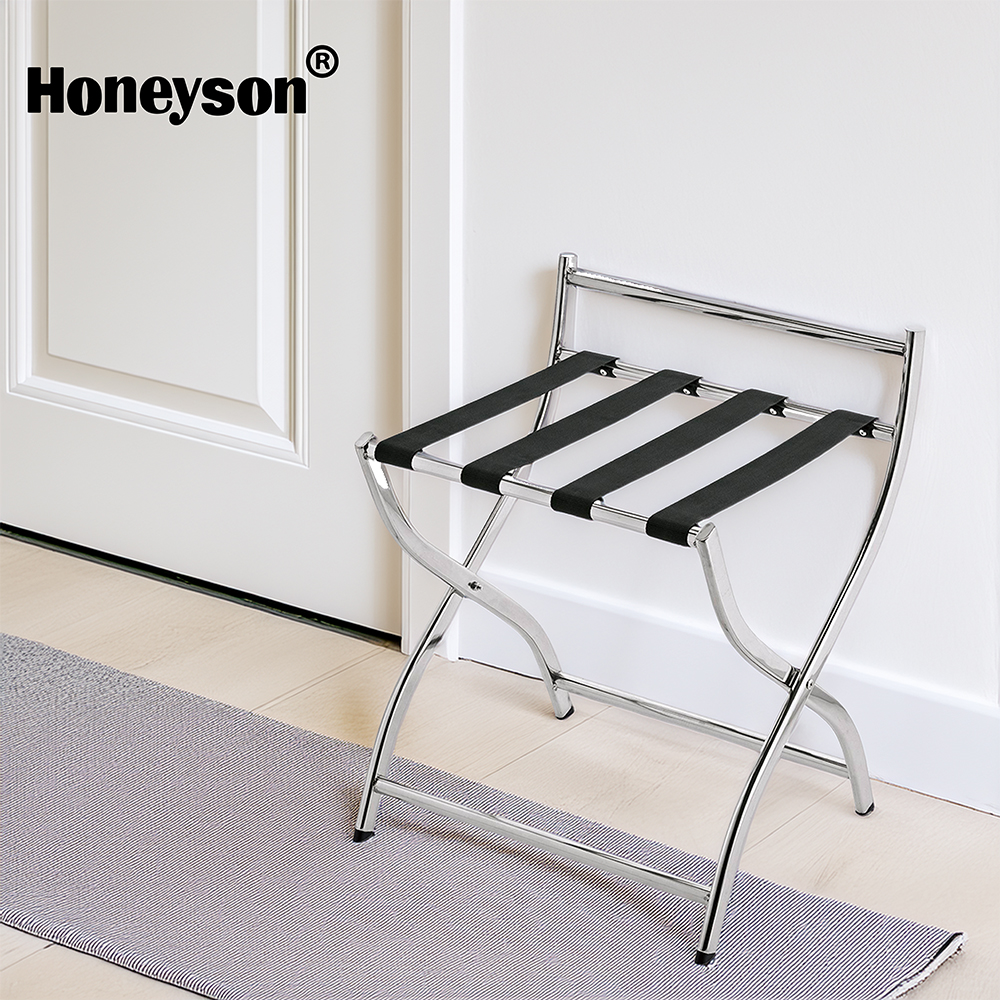
Electroplating, including nickel, chrome, and zinc plating, offers superior corrosion resistance and delivers a polished, professional appearance. Chrome plating, in particular, creates an attractive finish that enhances the visual appeal of a folding luggage rack or stationary model. The electroplating process builds a metallic layer on the surface through electrolytic deposition, providing excellent barrier protection against oxidation. For OEM luggage rack manufacturers targeting premium hospitality markets, electroplating justifies the higher cost through enhanced aesthetics and extended service life in corrosive environments such as seaside resorts or humid climates.
Hot-Dip Galvanizing and Stainless Steel Conversion
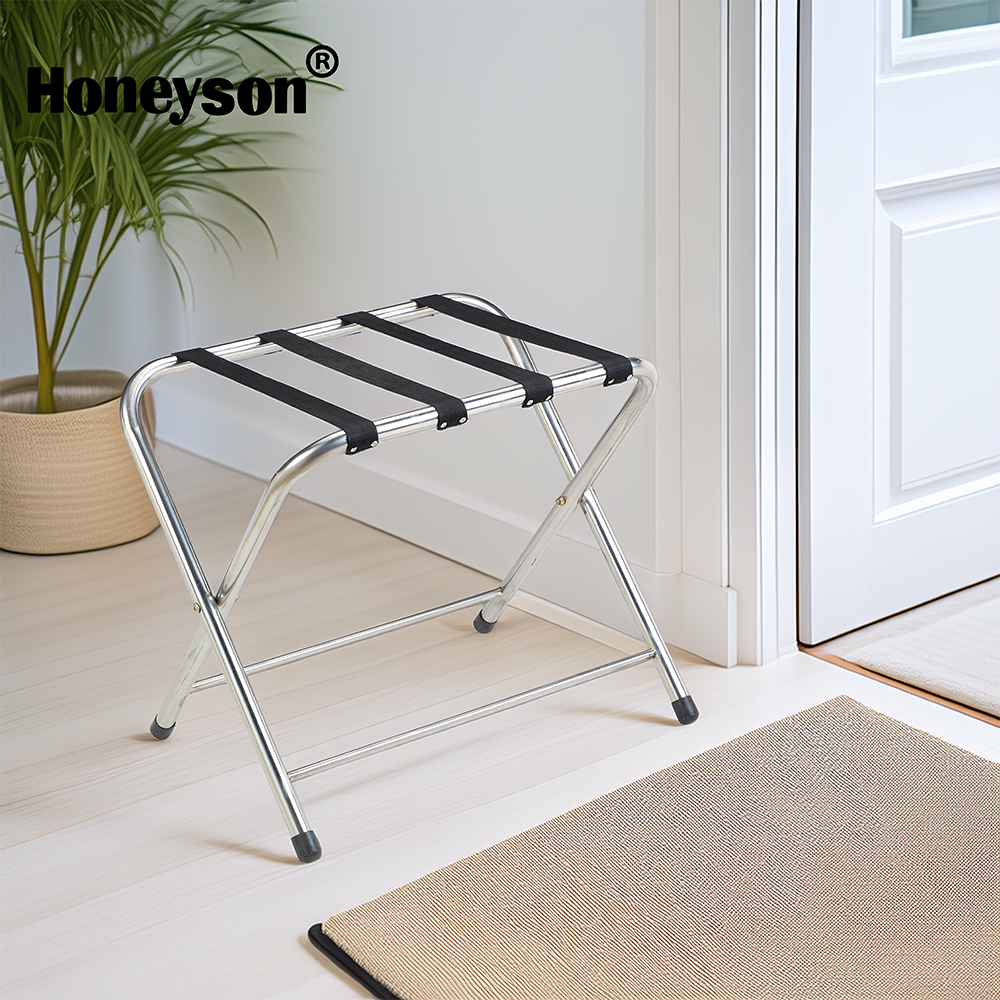
Hot-dip galvanizing stands out as the most durable surface finish option for metal luggage racks, especially those deployed in outdoor or highly humid environments. During hot-dip galvanizing, the entire metal part is immersed in molten zinc, creating a thick, multi-layered protective coating that self-heals when scratched. This inherent self-healing property means small damage exposes fresh zinc, which continues to protect the underlying steel. A folding luggage rack or hotel luggage rack finished through hot-dip galvanizing can remain serviceable for 50 years or more with minimal maintenance, making it the ultimate choice for maximum durability.
Stainless steel conversion coatings and 300-series stainless steel construction represent the premium tier for luggage rack durability. While true stainless steel components eliminate corrosion concerns entirely, they significantly increase material costs. Conversion coatings applied to carbon steel offer a middle-ground solution, providing corrosion resistance comparable to light galvanizing at lower material cost. OEM luggage rack producers often recommend stainless steel fasteners and conversion-coated frames for applications demanding maximum longevity without the thickness and cost of full hot-dip galvanizing.
Durability and Maintenance Profiles
Performance in Different Environments
The durability of any surface finish depends heavily on deployment environment. Indoor hotel luggage rack installations in climate-controlled lobbies face minimal corrosion stress and perform well with standard powder coating. The same finish applied to an outdoor resort luggage rack or poolside folding luggage rack would deteriorate rapidly due to salt spray, humidity, and UV exposure. Hot-dip galvanized luggage racks excel in these harsh settings, with studies showing 15 to 20-year lifespans even in coastal environments where unprotected steel would fail within two years.
Hospitality environments vary significantly in corrosion potential. Beachside properties, humid tropical resorts, and facilities with indoor pools create aggressive corrosion conditions that demand superior protection. An OEM luggage rack specified for such applications must incorporate hot-dip galvanizing, stainless steel components, or electroplated surfaces to ensure reliable performance. Indoor metropolitan hotels can rely on more economical finishes, but even these require periodic inspection to catch any coating damage before corrosion begins.
Maintenance and Lifecycle Costs
Maintenance requirements vary dramatically across surface finish options. Powder-coated luggage racks need occasional cleaning with mild soap and water but require touch-up paint when chips occur. An OEM luggage rack with powder coating typically requires professional recoating after 8 to 15 years depending on environment. Electroplated finishes demand regular polishing to maintain appearance but resist corrosion if the plating remains intact. Once plating fails, the underlying steel corrodes rapidly, often requiring complete replacement rather than repair.
Hot-dip galvanized metal luggage racks demand minimal maintenance beyond annual inspection and occasional cleaning. The self-healing zinc coating requires no touch-ups, and the material continues protecting the base metal even after decades of exposure. When calculating total cost of ownership, a hotel luggage rack or folding luggage rack with hot-dip galvanizing often proves most economical despite higher initial material costs, because replacement and maintenance expenses remain negligible across a 20 to 30-year service horizon.
Cost Analysis and Selection Criteria
Initial Investment and Material Costs
Surface finish selection directly drives initial material costs for luggage rack manufacturing. Standard powder coating adds approximately 15 to 25 percent to base fabrication costs, making it the most affordable option for price-sensitive applications. Electroplating increases costs by 30 to 50 percent depending on the plating type and thickness specified. Hot-dip galvanizing, while requiring higher upfront investment at 40 to 70 percent premium over unfinished steel, delivers the longest service life and lowest lifetime cost. An OEM luggage rack manufacturer evaluating finish options must balance customer budget constraints against service environment demands.
For hotel luggage rack procurement teams, the most economical choice often depends on property tenure and replacement cycles. Short-term leased facilities may justify economical powder coating finishes, while owner-operated properties investing in permanent infrastructure benefit from hot-dip galvanized or stainless components. A folding luggage rack deployed in high-turnover rental properties requires different cost-benefit analysis than a fixed installation in a flagship property. Material costs also fluctuate based on metal market pricing, plating chemical costs, and energy expenses for curing or heating processes.
Decision Framework for Finish Selection
Selecting the optimal surface finish for your luggage rack application requires systematic evaluation of environment, budget, and longevity requirements. Indoor, climate-controlled hospitality environments tolerate powder coating well, delivering satisfactory durability at minimum cost. Outdoor or poolside installations demand electroplating or hot-dip galvanizing to prevent premature failure. Coastal or high-humidity regions benefit most from hot-dip galvanizing or stainless steel construction, despite higher upfront costs. An OEM luggage rack produced for diverse markets should offer finish options allowing customers to specify appropriate protection levels for their specific deployment.
Long-term asset management favors durable finishes that minimize replacement frequency. A hotel luggage rack specified with hot-dip galvanizing or stainless steel components may represent a strategic investment in facility permanence and brand consistency. Conversely, budget-limited procurement may justify less durable finishes with planned replacement intervals. The critical insight is that surface finish choice should align explicitly with expected service life, replacement cost tolerance, and aesthetic requirements rather than defaulting to the lowest initial bid.
FAQ
What is the most durable surface finish for outdoor luggage rack applications?
Hot-dip galvanizing provides the most durable surface finish for outdoor luggage racks, offering 50+ year lifespans in harsh coastal environments. The thick zinc coating self-heals when scratched, continuously protecting the underlying steel without requiring maintenance or touch-ups. True stainless steel construction eliminates corrosion entirely but at significantly higher material cost. For maximum durability, hot-dip galvanizing delivers the best value across outdoor hospitality, poolside, and exposed industrial applications.
How does powder coating compare to electroplating for hotel luggage rack finishes?
Powder coating costs less and suits indoor hotel luggage rack applications well, offering good durability in climate-controlled environments at approximately half the cost of electroplating. Electroplating, particularly chrome plating, provides superior aesthetics and better corrosion resistance for premium properties, justifying higher costs through enhanced appearance and extended service life. Powder coating may require touch-ups or recoating after 8–15 years, while electroplated finishes resist corrosion longer but fail more catastrophically once plating integrity compromises. Choose powder coating for budget-conscious indoor installations and electroplating for upscale or moist environments where appearance and longevity justify premium investment.
What is the cost difference between surface finish options for OEM luggage rack manufacturing?
Powder coating adds approximately 15–25 percent to base costs, making it the most economical option for OEM luggage rack production. Electroplating increases costs by 30–50 percent depending on plating type and thickness. Hot-dip galvanizing requires 40–70 percent higher investment but delivers the longest service life, often proving most cost-effective across 20–30 year ownership horizons when maintenance and replacement expenses are factored in.
