
 EN
EN
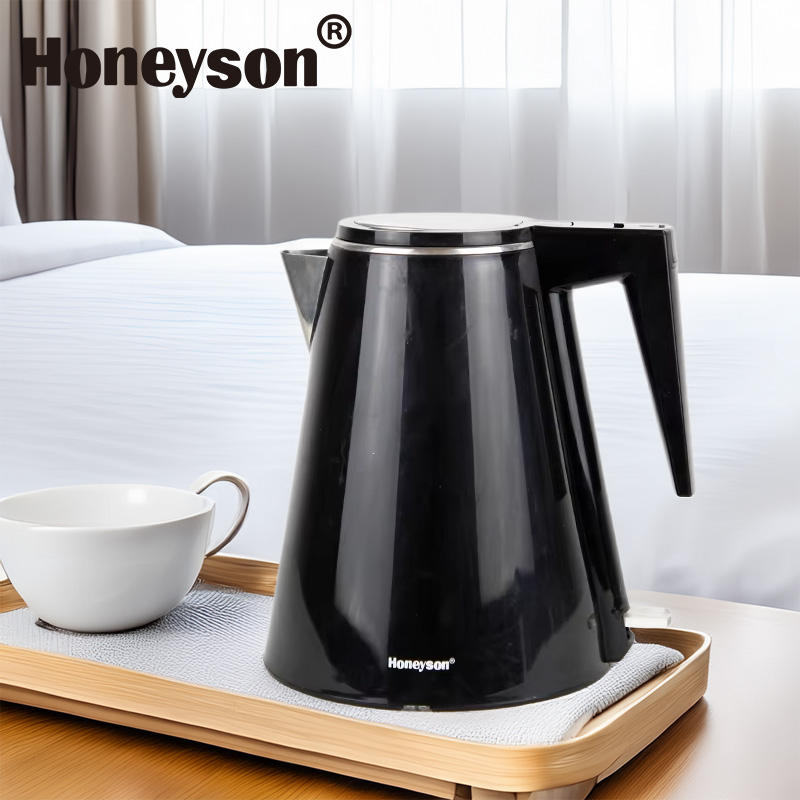
In the world of modern hospitality, every detail of a hotel room communicates a message to the guest. The linens, the lighting, the furniture finish — each element either reinforces a sense of quality or undermines it. Among these carefully curated details, the in-room electric kettle occupies a uniquely functional yet aesthetic role. It is one of the few appliances that guests interact with directly and personally, making its design, finish, and performance a direct reflection of the hotel's overall brand identity. Choosing the right model is not simply a procurement decision — it is a design statement.
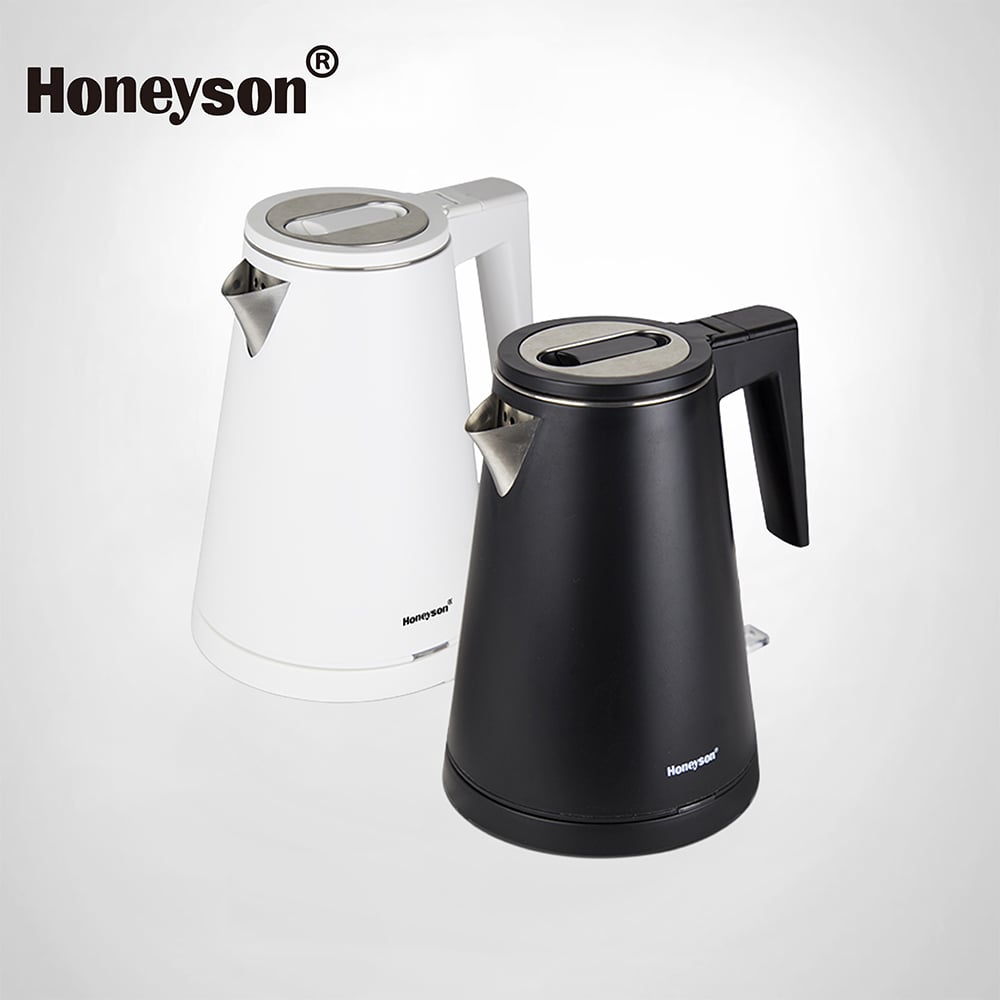
The rise of matte-finish appliances in contemporary interior design has significantly influenced how hospitality procurement teams evaluate the electric kettle. Where polished chrome or glossy white once dominated, today's upscale hotel room favors the restrained sophistication of a matte black or matte grey finish. This aesthetic shift aligns with broader design trends emphasizing tactile richness, understated luxury, and the so-called 'industrial elegance' aesthetic — a blend of raw material sensibility with refined manufacturing precision. This article explores what hotel operators and interior procurement specialists should consider when selecting a matte electric kettle that perfectly balances form, function, and guest experience.
Understanding the Industrial Elegance Aesthetic in Hotel Room Design
The Visual Language of Matte Finishes
Industrial elegance as a design philosophy draws from the visual vocabulary of architecture, fashion, and product design simultaneously. It embraces materials that look considered rather than ornate — brushed metals, concrete-inspired surfaces, dark woods, and above all, matte finishes. A matte electric kettle placed on a hotel room sideboard does not demand attention the way a high-gloss appliance might. Instead, it complements the room's visual composition with quiet authority. This is precisely the quality that makes the matte finish so well-suited to boutique hotels, design-forward business hotels, and luxury urban properties.
The tactile quality of a matte surface also contributes meaningfully to the guest's perception of quality. When a guest picks up a matte electric kettle, the soft, non-reflective finish signals premium manufacturing and deliberate design choices. It resists fingerprints more effectively than gloss alternatives, which means it maintains its refined appearance throughout the duration of a guest's stay without requiring constant polishing by housekeeping staff. For hotel operations teams, this practical advantage is as important as the aesthetic one.
Color plays a critical role within the matte finish spectrum. Matte black has become particularly dominant in contemporary hospitality design because it pairs with virtually every color palette — from warm terracotta and timber tones to cool grey and white minimalist schemes. A matte black electric kettle anchors the room's tea and coffee station with a grounding presence that feels both modern and timeless. Matte charcoal and matte slate grey offer softer alternatives for properties seeking a slightly less dramatic contrast while maintaining the same sophisticated finish quality.
Coordinating the Electric Kettle with the Room's Design System
In hospitality design, appliances are increasingly treated as part of an integrated design system rather than isolated functional objects. The electric kettle should be considered in relation to the room's other hardware finishes — door handles, tap fittings, light switch plates, and mirror frames. When these elements share a consistent finish family, the room achieves a coherence that guests feel intuitively even if they cannot articulate it. A matte black electric kettle paired with matte black door hardware and fixtures creates exactly this kind of subtle, professional consistency.
Procurement teams working on large-scale hotel fit-outs or refurbishments should specify the electric kettle at the same time as other in-room hardware rather than treating it as a final-stage afterthought. This ensures finish matching is accurate and that the overall aesthetic reads as intentional. Many hospitality buyers underestimate the impact of the tea station as a design zone within the room. In reality, it is one of the surfaces guests spend the most time interacting with, and a well-chosen matte electric kettle elevates the entire space.
Key Functional Criteria for Hotel-Grade Electric Kettles
Safety Features Appropriate for Guest Environments
An electric kettle placed in a hotel room must meet a significantly higher safety standard than a domestic appliance because it will be used by an enormous variety of guests over its lifespan — including elderly travelers, guests unfamiliar with the local voltage standards, and children accompanying families. Cool-touch body technology is among the most important safety features to specify for any hotel-grade electric kettle. This design ensures that the outer body of the appliance remains safe to the touch even when the water inside is at full boiling temperature, dramatically reducing the risk of accidental burns.
Auto shut-off is another non-negotiable feature for hotel electric kettle specifications. This function automatically cuts power when the water reaches boiling point, preventing the unit from running dry, which can damage the heating element and create a fire hazard. Similarly, boil-dry protection — which activates if the kettle is switched on without sufficient water — provides an additional layer of safety that is particularly important in hotel environments where guests may operate appliances in unfamiliar ways or under tired, distracted conditions.
Cord management is a frequently overlooked safety and aesthetic consideration. Concealed or recessed cord storage keeps the tea station tidy and reduces trip hazards, which is particularly relevant for guest rooms with limited counter space. A 360-degree swivel base allows guests to lift and pour the electric kettle from any angle without straining the cord, which both improves ease of use and extends the product's operational lifespan by reducing mechanical stress on the connection point.
Capacity and Heating Performance for Single-Room Use
Hotel room electric kettles are typically specified at lower capacities than domestic models, and for good reason. A capacity in the range of 0.8 liters is widely considered optimal for single or double occupancy hotel rooms. This size heats water quickly — typically in under three minutes — which aligns with guest expectations for immediate, convenient service. It also reduces the energy cost per boil and limits the risk of guests leaving large quantities of water sitting in the unit between uses, which can affect water taste and encourage limescale buildup.
Heating element quality directly determines both performance consistency and long-term reliability. Concealed stainless steel heating elements are the preferred specification for hotel electric kettles because they are significantly easier to clean, resistant to limescale accumulation, and produce no metallic taste transfer to the water. In regions with hard water, the ease of descaling the interior of the electric kettle is a meaningful operational consideration for housekeeping teams. A unit with a wide mouth opening and a smooth interior makes routine maintenance far more manageable at scale.
Noise level during boiling is a detail that distinguishes truly guest-focused electric kettle design from purely functional approaches. Excessive boiling noise in a quiet hotel room can feel jarring, particularly for guests using the kettle early in the morning or late at night. Well-engineered hotel-grade units employ design features that moderate the acoustic profile of the boiling process, contributing to a calmer, more premium in-room experience. This is a specification detail worth requesting data on from suppliers during procurement evaluation.
The Double-Body Design Advantage in Hospitality Settings
What Double-Body Construction Means for Hotels
The double-body construction used in certain hotel-specification electric kettle models refers to an inner water vessel and an outer decorative shell that are structurally separate. This design approach creates a thermal gap between the hot inner vessel and the outer surface that guests touch, which is the engineering foundation of the cool-touch feature discussed earlier. For hotel applications, this is more than a safety feature — it is a durability and maintenance advantage that significantly extends the operational life of the unit.
The outer shell of a double-body electric kettle can be manufactured from materials selected for their aesthetic and durability properties independently of the inner vessel's thermal requirements. This means the matte finish outer body can be engineered to resist the kind of surface wear that hotel appliances routinely experience — repeated handling, cleaning with hospitality-grade products, and occasional minor impacts. The inner vessel, meanwhile, can be optimized purely for water contact safety and heating performance without any aesthetic compromise.
From a procurement perspective, the double-body construction also simplifies replacement cycles. In some configurations, the outer shell components can be replaced independently if surface damage occurs, rather than requiring the entire electric kettle unit to be replaced. This modular approach to product lifecycle management can deliver meaningful cost savings for large hotel operations managing hundreds of units across multiple properties.
Thermal Efficiency and Guest Comfort Implications
Beyond safety, the double-body design provides measurable thermal efficiency benefits. The insulating air gap between the two layers slows heat dissipation from the water inside, meaning that water boiled in a double-body electric kettle retains its temperature longer than in a single-wall unit. For guests who fill the kettle and then prepare their beverage in stages — perhaps making a cup of tea and then returning five minutes later to top up — this extended heat retention is a genuine comfort improvement.
This thermal efficiency also has a subtle positive effect on energy consumption. When guests re-boil water that has partially cooled, they consume additional electricity. A thermally efficient electric kettle reduces the frequency of re-boiling cycles, which represents a small but meaningful contribution to the hotel's overall energy management strategy. For properties pursuing sustainability certifications or green hospitality ratings, specifying thermally efficient room appliances is a relevant and demonstrable operational measure.
Selecting the Right Electric Kettle Specification for Your Property
Matching Specification to Property Category
The appropriate specification for a hotel room electric kettle varies meaningfully across property categories. A lifestyle boutique hotel in an urban market has different priorities from a large-format business hotel or a resort property. For boutique and design hotels, the aesthetic specification of the electric kettle carries the highest weight — the matte finish, the silhouette, the way the unit photographs for marketing imagery, and its coherence with the room's overall design concept are all primary considerations. Functional performance is expected to meet baseline standards, but design differentiation is the competitive priority.
For business hotels serving high-volume transient corporate travelers, durability and ease of housekeeping maintenance become the dominant specification criteria. The electric kettle in this context needs to withstand continuous daily use, resist the handling involved in linen changes and room servicing, and require minimal maintenance intervention to remain visually presentable. A matte finish that resists fingerprinting and surface marking is a specific functional advantage in this environment, not merely an aesthetic preference.
Resort and leisure properties may weight the electric kettle specification differently again, particularly if the room experience is designed around a specific cultural or regional narrative. In these contexts, the finish, form factor, and even the color family of the electric kettle can be selected to reinforce a broader storytelling approach to the guest environment. A matte earth-tone electric kettle in a nature-themed resort room, for example, contributes to an immersive experience in a way that a generic appliance never could.
Evaluating Supplier Capability and Product Consistency
For hotel groups procuring electric kettles at scale, supplier capability evaluation must go beyond individual product samples. The critical consideration is whether the supplier can deliver consistent finish quality, consistent performance specifications, and consistent product dimensions across a large batch order. Finish consistency is particularly important for matte products because the matte effect is achieved through surface treatment processes that can vary if quality controls are not rigorously applied. Even minor variations in sheen level across a batch of units will be perceptible when multiple rooms are viewed side by side.
Lead time reliability and after-sales support capability are equally important evaluation dimensions for large hospitality procurement programs. Hotels operating on renovation schedules need to trust that replacement units ordered months or years after the initial specification will match the original product exactly. This argues for working with suppliers who maintain product continuity programs and can provide written confirmation of finish and specification stability over defined support periods. The electric kettle may be a relatively low unit-cost item, but at scale, specification drift can become a significant operational and aesthetic problem.
FAQ
What capacity electric kettle is best suited for a hotel guest room?
For single or double occupancy hotel rooms, an electric kettle with a capacity of approximately 0.8 liters is generally considered optimal. This size heats water rapidly, minimizes energy use per boil, and reduces the likelihood of water sitting unused in the unit for extended periods. Smaller capacities may frustrate guests who want to prepare multiple hot beverages, while larger capacities unnecessarily increase energy consumption and counter space requirements.
Why is the cool-touch feature important in a hotel room electric kettle?
Cool-touch body technology ensures that the external surface of the electric kettle remains safe to touch even when the water inside is boiling. In hotel environments, guests include a wide range of individuals — elderly travelers, children, and guests unfamiliar with local appliance standards — making burn risk mitigation a critical safety specification. The double-body construction common in hotel-grade electric kettles provides this cool-touch performance while also contributing to thermal efficiency and product durability.
How does a matte finish benefit hotel housekeeping operations?
Matte finishes are significantly more resistant to visible fingerprinting and surface marking than gloss alternatives, which means a matte electric kettle maintains its presentable appearance for longer between cleaning cycles. Housekeeping staff can quickly wipe the unit during room servicing without the time-intensive polishing required to keep gloss appliances looking pristine. This operational efficiency advantage is particularly meaningful for large properties servicing hundreds of rooms daily.
What should hotel procurement teams prioritize when specifying an electric kettle for a design-forward property?
Design-forward properties should prioritize finish quality, silhouette coherence with the room's hardware scheme, and the overall visual impact of the electric kettle at the tea station. Matte black and matte grey finishes are the most versatile choices for contemporary interior schemes. Beyond aesthetics, the specification should include cool-touch body construction, concealed heating element, auto shut-off, and boil-dry protection to ensure the unit meets the safety and performance standards expected of a hospitality-grade appliance.
Table of Contents
- Understanding the Industrial Elegance Aesthetic in Hotel Room Design
- Key Functional Criteria for Hotel-Grade Electric Kettles
- The Double-Body Design Advantage in Hospitality Settings
- Selecting the Right Electric Kettle Specification for Your Property
-
FAQ
- What capacity electric kettle is best suited for a hotel guest room?
- Why is the cool-touch feature important in a hotel room electric kettle?
- How does a matte finish benefit hotel housekeeping operations?
- What should hotel procurement teams prioritize when specifying an electric kettle for a design-forward property?