
 EN
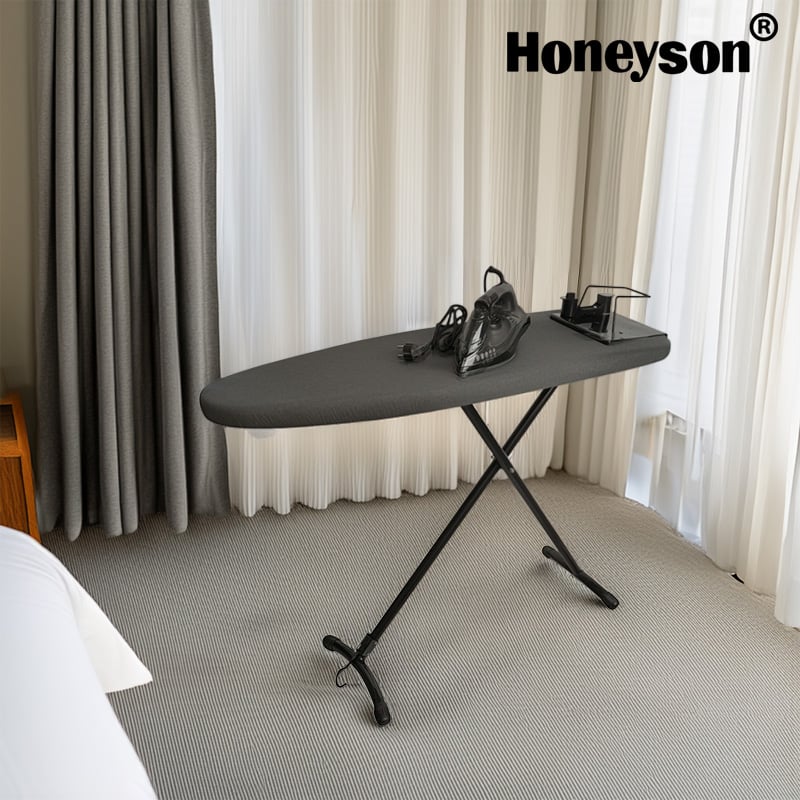
The durability and performance of a wall mounted ironing board depend far more on engineering precision than most users realize. When you invest in a wall mounted ironing board for your home or commercial space, the hinge and spring mechanisms are the hidden foundation that determines whether your board will last years or fail within months. Understanding how these critical components work reveals why some boards maintain smooth operation and stability while others develop wobbling, jamming, or complete structural failure over time.

Professional environments like hotels and laundry facilities face even higher demands. An hotel ironing board experiences far more daily cycles than a residential unit, making material quality and mechanical design non-negotiable factors. Whether you operate a hotel, manage a commercial laundry, or maintain OEM ironing board systems for institutional clients, recognizing the relationship between component quality and lifespan can save significant replacement costs and improve guest or customer satisfaction.
Hinge Mechanisms and Structural Integrity
Load-Bearing Hinge Design
The hinge serves as the mechanical pivot point where the fold down ironing board transitions between closed and open positions. A best wall mounted ironing board uses reinforced hinges engineered to handle repetitive stress without degradation. High-quality hinges employ stainless steel or zinc-plated construction that resists corrosion, while inferior designs use thin-gauge materials that bend, warp, or rust after exposure to moisture and repeated use.
The load-bearing capacity of the hinge directly affects board stability during ironing. When a user presses down on the board surface with force, the hinge must absorb and distribute that pressure evenly. A poorly designed hinge concentrates stress at single points, leading to micro-fractures and eventual failure. Quality OEM ironing board manufacturers specify hinge pin diameters, material thickness, and bracket reinforcement to ensure the board remains level and stable throughout its operational life.
Material Grade and Durability
Hinge material grade separates premium wall mounted ironing board models from budget alternatives. Cast iron or solid steel hinges typically outlast stamped steel options by years because they can withstand thermal expansion and contraction without cracking. A hotel ironing board encounters temperature fluctuations from steam and atmospheric changes, making material resilience essential for long-term performance. Budget-grade hinges fail faster because manufacturers reduce material cost by using thinner gauge steel or lower-grade alloys that yield under pressure.
Spring Tension and Operational Performance
Spring Quality Standards
The spring mechanism controls how smoothly the fold down ironing board opens, closes, and locks into position. A best wall mounted ironing board incorporates precision-wound springs manufactured to exacting tolerances so that tension remains consistent across thousands of cycles. High-grade springs use chrome-silicon alloy or stainless steel that resists stress relaxation—the gradual loss of tension that causes boards to droop or fail to lock properly. Over time, inferior springs lose tension irreversibly, leaving users struggling to operate the board safely or secure it when folded.
Spring tension directly impacts user safety and satisfaction. If springs are too weak, the board sags during use, creating an uneven ironing surface and discomfort. If springs degrade unevenly on each side, the board tilts, causing water or condensation from a steam iron to pool on one side. Commercial hotel ironing board systems require calibrated springs that maintain balance even after thousands of opening and closing cycles. OEM ironing board manufacturers conduct fatigue testing to confirm springs retain adequate tension after simulated years of use.
Counterbalance and Lock Mechanisms
Beyond tension, the spring system must feature reliable counterbalance and lock mechanisms. A well-designed wall mounted ironing board includes a dampening system that slows the opening motion, preventing the board from snapping open suddenly. Lock pins or catches secure the board in the fully extended position, preventing accidental collapse during use. When springs degrade, these safety features often fail first, making the board unsafe or unreliable. The best wall mounted ironing board models integrate redundant locking features so that even if one mechanism wears, others maintain safety.
Impact on Lifespan and Total Cost of Ownership
Failure Patterns and Replacement Cycles
Poor hinge and spring quality accelerates failure patterns that shorten fold down ironing board lifespan. Residential users often discover that hinges loosen or boards stop locking after 2–3 years of moderate use. In contrast, a best wall mounted ironing board with quality components can perform reliably for 8–10 years or more. Hotel ironing board systems face even harsher conditions and depreciate faster, but those built with reinforced hinges and high-grade springs remain serviceable for 5–7 years in daily-use environments. Budget OEM ironing board designs often fail catastrophically within 2 years because component degradation compounds—weak springs stress the hinges, damaged hinges stress the springs, and the entire system collapses.
Maintenance and Hidden Costs
Quality hinge and spring systems reduce long-term maintenance burdens and hidden costs. A wall mounted ironing board with poor components requires frequent adjustments, lubricant reapplication, and component tightening to maintain safe operation. If the board fails unexpectedly, labor costs, downtime, and customer dissatisfaction accumulate quickly, especially in hotel settings. Conversely, a quality fold down ironing board with professional-grade hinges and springs requires minimal maintenance—occasional cleaning and light lubrication suffice. When you calculate total cost of ownership over a 5–10 year period, investing in a best wall mounted ironing board upfront eliminates the compounding expenses of repairs and premature replacement. This logic applies equally to residential users and hotel ironing board managers who must balance capital expense against operational reliability.
FAQ
What specific hinge materials indicate quality in a wall mounted ironing board?
Stainless steel, zinc-plated steel, and cast iron hinges are superior choices for a wall mounted ironing board because they resist corrosion, maintain structural integrity, and handle repeated stress without bending. Avoid boards with thin stamped steel or uncoated iron hinges, as these rust and weaken quickly. When reviewing OEM ironing board specifications, look for hinge pin diameter and material grade information to confirm quality standards.
How can I test if a fold down ironing board has adequate spring tension?
Manually open and close the fold down ironing board several times to assess spring response. The board should open smoothly without requiring excessive force and should close with controlled deceleration rather than snapping shut. The locking mechanism should engage firmly with audible or tactile confirmation. A best wall mounted ironing board demonstrates consistent, effortless operation across all cycles. If you feel hesitation, grinding, or uneven tension, the springs may be degraded or misaligned.
Why do hotel ironing board systems need different quality standards than residential models?
Hotel ironing board units experience 10–50 times more use cycles than typical residential wall mounted ironing boards. The higher frequency of opening, closing, and locking stress hinges and springs intensely. Professional OEM ironing board manufacturers engineer hotel-grade models with heavier gauge materials, more robust springs, and reinforced hinges to survive commercial-scale demand. This durability translates to lower replacement costs and higher guest satisfaction over the system lifespan.
